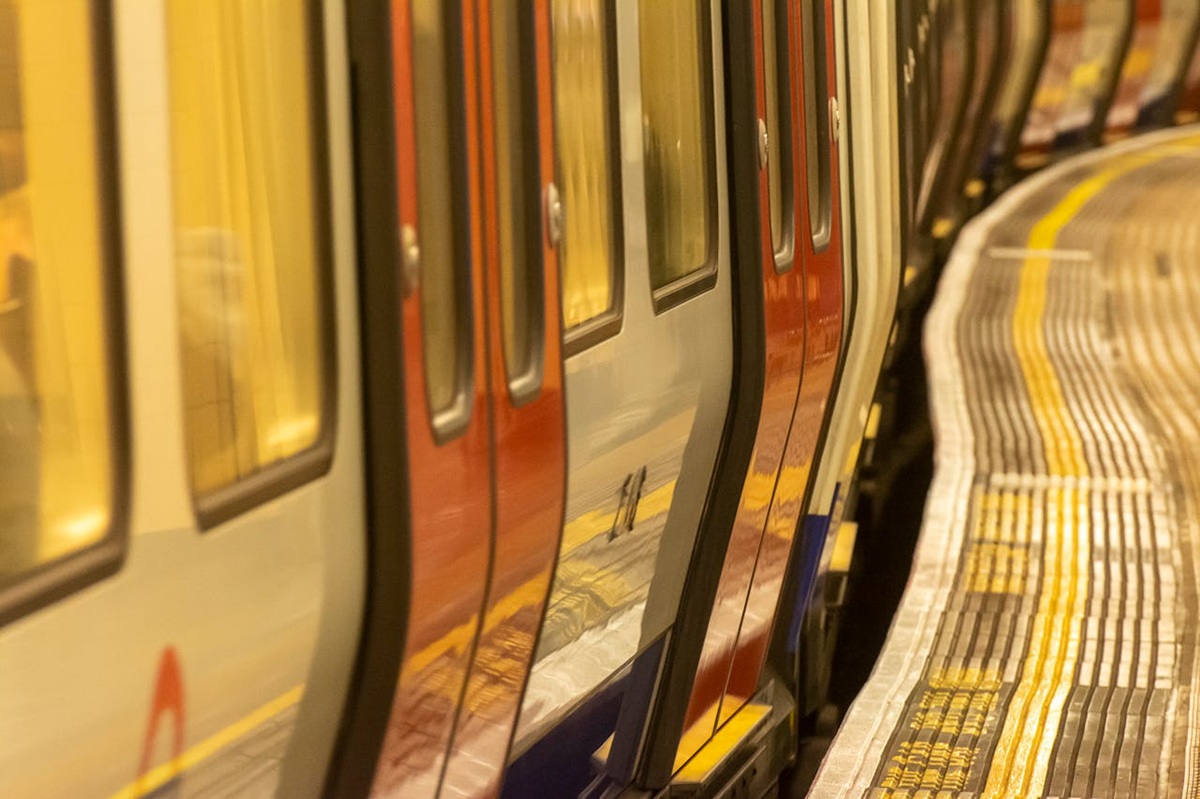
Exploring London means you’ll likely hop on the London Underground, the preferred way to navigate the city. It’s usually the quickest option for getting around, often outpacing taxis by a good margin.
You can always rely on finding an underground station conveniently located near both your destination and your hotel. Currently, the London Underground has 272 stations spread across 11 lines, and they inaugurated the latest addition, the Elizabeth Line, in May 2022.
Use the TfL (Transport for London) journey planner to plan your travel. The journey planner covers all public transport.


The Circle line doesn’t really go around in a squashed circle and it is not apparent for instance that Bayswater Underground is only 100 yards from Queensway.
In 2016, they introduced the Night Tube. On Friday and Saturday nights only Underground trains run through the night. For lines that operate a night service see the Night Tube map linked below or on the right-menu.
In May 2022 the long awaited Elizabeth Line opened its first section. The Elizabeth Line provides a route connecting East and West London.
Find out more about the new Elizabeth Line.
Maps:
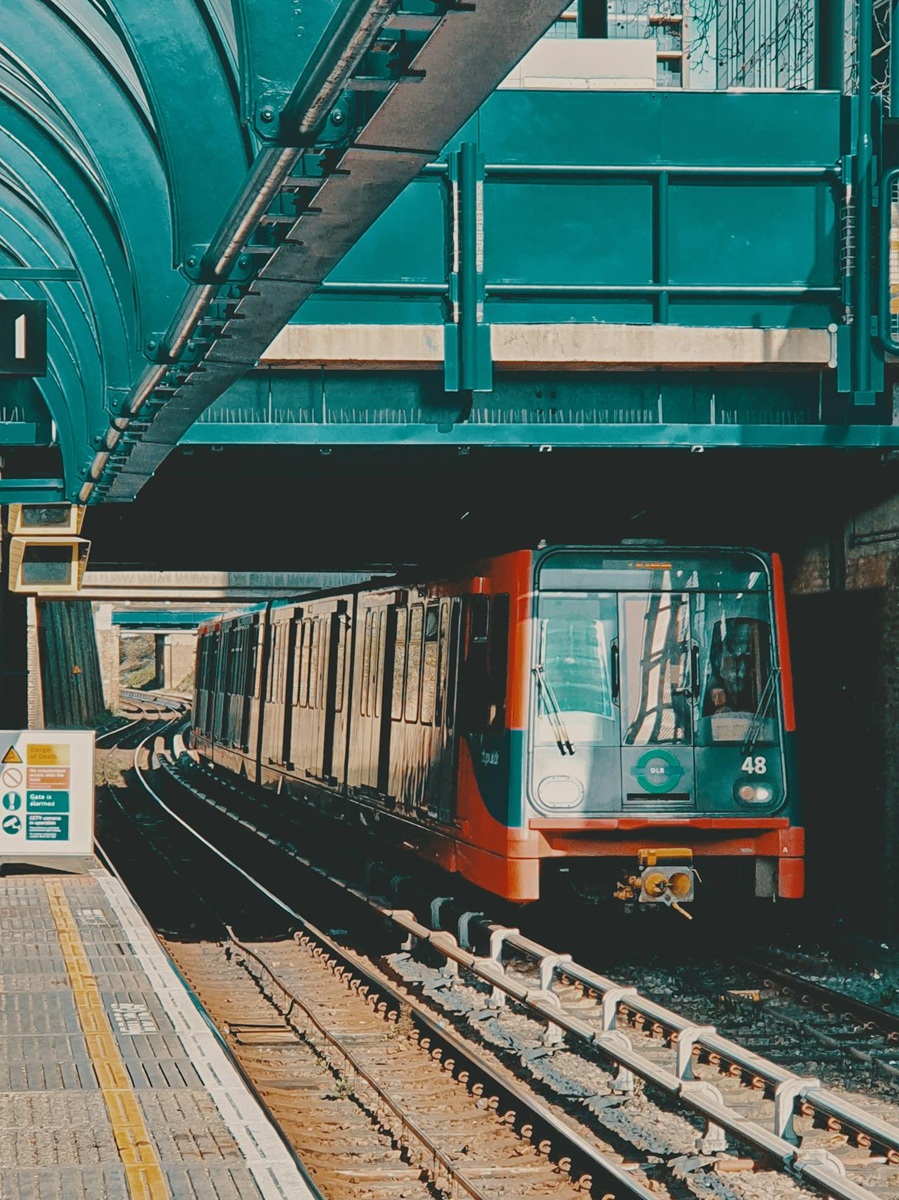
To the east of London in the Docklands region you will see a region covered by something called the DLR (Docklands Light Railway). You can treat this network as just another Underground line.
In the outskirts of London, rather than its bustling center, you can discover a train system known as the Overground. This network is often considered an extension of the Underground when it comes to ticketing options.
Commuter trains into the suburbs are very confusing for the visitor. You can still use Oysters and Travelcards on these but those lines run by the national railways only give free travel to children under 5.
In the north and east of London most of these services are now run by TfL Rail or the Overground so free travel is available to children under 11, but to the south and west of London, services are still dominated by national railways companies.
The Tube and rail map usefully shows which railway stations are in which travel zones. Travel zones are the basis for fare charges on London’s railways and Underground system.
In 2016 the London Underground began to introduce a full 24/7 service on Friday and Saturday nights only. Introduction has been on a phased basis.
Night Tube services are now running on the Central, Victoria, Jubilee line, Northern line (Charing Cross branch) and Piccadilly line (but not Acton to Uxbridge branch). The Night Tube will offer a 24-hour service on Fridays and Saturdays. Standard off-peak fares are levied for travelling on the Night Tube using Oyster and Contactless cards.
Travelcards are valid from the first day of issue (using the date printed on the card), and for journeys starting before 4.30am the following day. For example, if you buy a 1-day Travelcard at 11am on Friday, you can use it until 4.29 on the following Saturday.
Night Tube map – current lines operated
The London public transport system is divided up into zones that radiate from the centre. Nearly all the hotels and the main sights are in Zone 1. Heathrow Airport is in Zone 6 and the furthest zone out is Zone 9.
The majority of visitors will only travel between the two most central zones 1 and 2. The Underground Map clearly indicates the stations along with their respective zones.
Some stations, such as Turnham Green, are in two zones. You use whichever zone for these stations is most beneficial in working out your fare.
You can see from the table below there is big financial incentive not to purchase individual tickets and use an Oyster card or Contactless payment card.
One alternative method of payment is to buy a Travelcard, which allows for unlimited travel over a specified duration. The price increases based on the number of zones you want to cover. Essentially, the more zones you need, the higher the cost of the Travelcard.
| Zone(s) | Single Journey Ticket – Cash | Oyster / Contactless Payment Card~ | ||
| Adult | Child (Off-peak) † | Peak* | Off-peak | |
| Zone 1 | £7.00 | £3.50 | £2.90 | £2.80 |
| Zone 1 & 2 | £7.00 | £3.50 | £3.50 | £2.90 |
| Zone 1 to 3 | £7.00 | £3.50 | £3.80 | £3.10 |
| Zone 1 to 4 | £7.00 | £3.50 | £4.60 | £3.60 |
| Zone 1 to 5 | £7.00 | £3.50 | £5.20 | £3.60 |
| Zone 1 to 6 | £7.00 | £3.50 | £5.80 | £3.80 |
| Zone 2 to 6 | £7.00 | £3.50 | £5.80 | £3.80 |
No return fares.
† Children can travel for free if they are under 11 years old, or if they are between 11 and 15 years old and have an Oyster 11-15 Photocard.
~ Children’s fares (age 11-15) with Oyster pay as you go single underground fares. Zones 1 to 6 £0.90 off-peak, £1.00 peak.
* Peak fares apply Monday to Friday between 6:30am and 9:30am and 4pm to 7pm, except public holidays.
As you can see from the above fare structure the authorities do not want you to buy single tickets, they want you to purchase one of the three payment options, Oyster cards, Contactless payment cards or Travelcards.
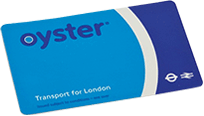
The Oyster card is a permanent reusable electronic ticket which is topped up from time to time by its owner. Londoners also have their season tickets loaded onto Oyster cards as well and there are passes for one weekly and monthly durations. All can be loaded onto the one electronic Oyster card.
Contactless cards are standard credit or debit cards that support the contactless payment technology. The total cost of all the journeys that you make in one day is calculated at the end of the day and a single charge is made to your Contactless payment card account.
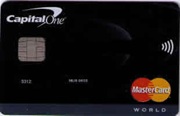
Unlike the Oyster card the contactless facility has a 7-day cap as well as the Oyster daily cap used by Oyster.
You can use Oyster cards on all of London’s public transport, not just the Underground, but buses, overground, DLR, suburban rail services and some river services.
Travelcards are another alternative. Valid on the same modes of transport but are unlimited travel passes for a fixed flat fee. Travelcards are available for 1 and 7 days, 1 month and 1 year durations.
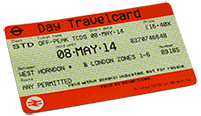
You can purchase and subsequently top up Oyster cards and Travelcards from Underground stations and a wide variety of other outlets throughout London including neighbourhood stores, but not Contactless payment cards.
Contactless payment cards – more details
As previously mentioned Visitors to London do not have access to senior fares.
If you live in London and are of pensionable age, you can obtain a Freedom Pass for free travel. Additionally, if you’re 60 or older and reside in London, you can get a Seniors Oyster ID Card, which allows for free bus travel. You can apply for these online or pick up a form at your nearest Post Office.
Anybody with an English National Concessionary bus pass can use that on London’s red buses too, and travel free of charge.
If you have a Senior Railcard you can get your 1/3 discount on off-peak Oyster fares. You have to ask a member of staff to load the concession on to a standard Oyster card (note, not a Visitor Oyster card) at an Underground station after showing your Seniors Card.
If you have a Senior Railcard you can also buy a 1 day off-peak zone 1-6 Travelcard at the discount applied.
This is a very complex subject and is covered in detail below. Generally, a child is defined as under 16 years old, but in the last couple of years it has been possible to get child fares after jumping through a few hoops up to the age of 17.
Children under 11 can travel free on the London Underground, DLR and buses without a ticket. If a child is between 11 and 15 years old, you require an Oyster 11-15 Photocard (which has a fee, see below). This allows 11 to 15 year olds to travel at child fares on the Underground, DLR, Overground and some trains, free on the buses.
If you are a short-term visitor (in London for up to 14 days) with kids between 11-15 you can take advantage of the Young Visitor Discount. This means you can get half price fares on an Oyster card on a temporary basis for your child without going through the hoops and expense of getting an Oyster ID card. You do need to read carefully the rules of this scheme though.
Children under five can travel free at any time on the Tube, DLR, buses and trams as long as they are accompanied by an adult with a valid ticket. You do not need a ticket for free travel. Children in this category do not need Oyster ID Cards*.
Under-11s can travel free at any time on buses and trams without the need for a Oyster ID Card*. You do not need a ticket for free travel.
They can also travel free at any time on the Tube, DLR , Overground and any TfL train service when they are travelling with an adult who has a valid ticket. Up to 4 children under 11 years old accompanied by a paying adult travel free.
Travel on the national railways which operate suburban commuter trains in London only have free travel for those under 5. In the last year or so many train routes in London have switched from the railways to TfL Rail.
Confusingly a few national railways routes where both rail and TfL rail operate on the same tracks children under 11 can travel free on the railways trains – this includes the popular route for visitors between Euston and Watford Junction (for Warner Bros Studio Tour London – the Making of Harry Potter).
Unaccompanied children between 5 and 10 must have a valid Oyster ID Card*.
Children aged 11 to 15 years must get an 11-15 Oyster ID Card* to travel free on buses and trams and at child-rate on Tube, DLR and London Overground services. You do not need a ticket for free travel, just the ID Card.
You cannot get a standard child rate Oyster card without an Oyster ID Card.
Young Visitor Discount (for visitors to London staying up to 2 weeks)
If you are a short-term visitor to London you can get child fares on a special child Oyster card that expires after 14 days. There are restrictions. You can only get these Oyster cards credited with a Young Persons Discount at Underground stations, TfL Rail stations, Visitor or Travel Information Centres and Victoria National Rail station ticket office.
Alternatives to Oyster cards for children
You can get around the Oyster ID card requirement by purchasing a 1 day Travelcard for the child (longer length Travelcards do require an Oyster ID Card), paying the cash fare or purchasing your Child Travelcard online in advance from the TfL Visitor Shop.
You can buy 7 day child Travelcards at railway stations (not Underground or Overground) with a railway ticket office. The railways will issue a railways photocard free of charge if you bring along a passport size photo of your child. You can only use this for buying tickets from the railways which in practise for visitors means Travelcards.
All 16 to 17-year-olds can travel at child-rate on bus, Tube, tram, DLR and London Overground services with a 16+ Oyster ID Card*.
However, you can only use this concession on Oyster cards and 7 Day Travelcards or longer, not 1 day Travelcards.
If you are 18 or over and enrolled with a participating education establishment registered on the TfL scheme and are resident in London while studying there is an Oyster ID card that gives a 30% discount on adult-rate Travelcards and Bus & Tram Pass season tickets.
Apply for a child’s Oyster ID card
Advance application for Child Oyster ID Card
*Oyster ID Cards
Visitors to London from overseas can order an Oyster Photocard in advance for their children and collect on arrival at a travel centre. There is a Travel Centre at Heathrow Airport as well as in Central London. If you are resident in the UK but live outside London you can again order online but the Oyster ID Card is sent to your home address.
Note: you need to apply (online) at least 4 weeks prior to arrival. Additionally, there is a non-refundable £10-£20 administration fee for each Oyster ID Card.
This ticket is for groups of 10 or more travelling together.
This in scope is the same as a 1-day off-peak Travelcard for zones 1-6 and 1-9 providing unlimited travel on all services after 9.30am Monday to Friday and all day Saturday, Sunday and Bank Holidays.
The pricing is particularly attractive if you have kids in the group and those staying in one of the outer zones, however if you are staying in the centre of London zones 1 to 3 it will be cheaper to purchase individual Oyster cards.
If you are a group of 10 or more then do check out this product.
There are no longer manned ticket offices at Underground and DLR stations. All tickets are dispensed by ticket machines in the ticket hall and there will be a member of staff hanging around these.
The same machines will allow you to top up your Oyster cards or see what the balance is on your Oyster card and they will also allow you to cancel your Oyster card and get your deposit and any cash left on the Oyster refunded.
If you prefer to talk with someone when purchasing tickets, you can find Oyster ticket stops. There are plenty of these, usually located in convenience stores or newsstands that offer public transport tickets as an additional service. You’ll spot these places by the sign in their front window.
The cost of your ticket is determined by the zones of your starting and ending stations. Your trip begins as you pass through the ticket barrier at your departure station and concludes when you exit through the barrier at your destination.
It’s important to note that you cannot make any stops during a single fare journey; once you go through the exit barrier at any station, your journey is considered complete.
To enter the platforms and leave a station, you need to go through automatic barriers, as shown in the image. There is always a spacious ticket barrier available for those using wheelchairs, pushing strollers, or carrying large suitcases.
If you have a single ticket, the barrier at your destination will not return your ticket. There is a manned side gate by the barriers. If you have a Travelcard you insert the Travelcard into the same slot as for the single tickets, the barrier will check that your Travelcard is valid for both date and zones travelled.
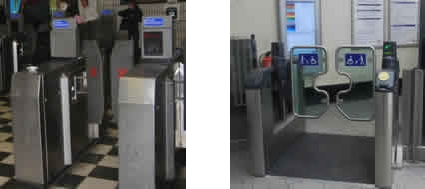
If you have an Oyster card or Contactless payment card you swipe the card over a bright yellow pad, the barrier will check validity and will record the station you have started your journey before opening the barrier. The barrier may display the balance on your Oyster too.
At your destination station, exiting through the barrier in effect tells the system you have ended your journey and it works out the fare to be deducted from your card.