
Visiting Bath
What to expect on a visit to the city of Bath
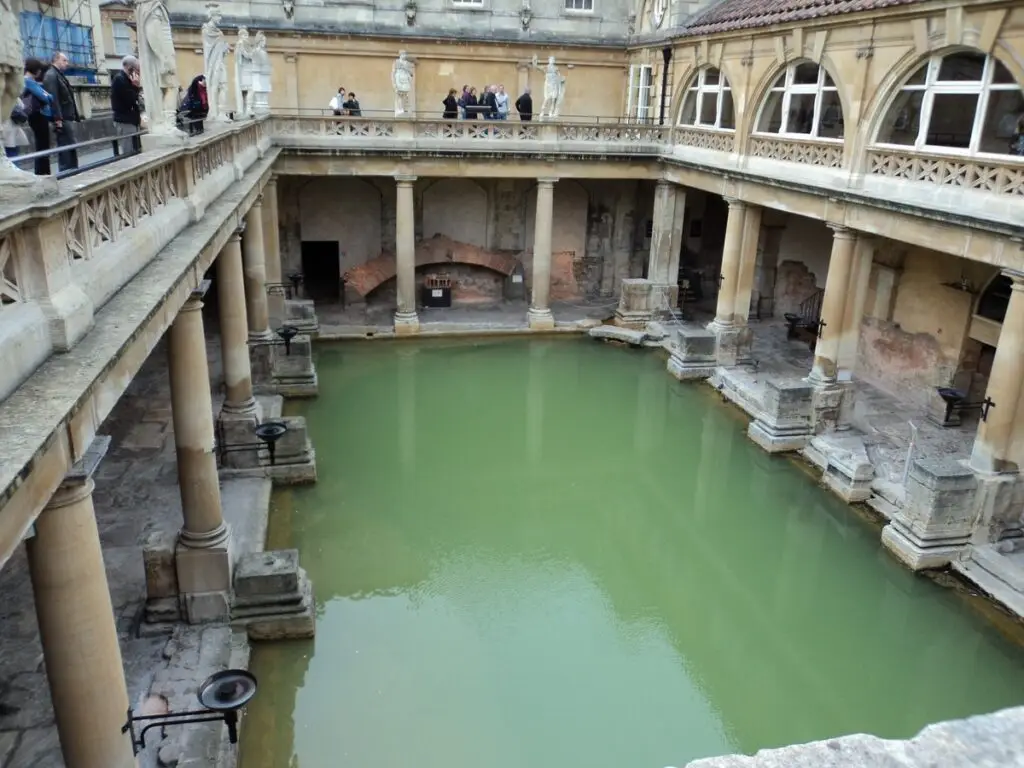
Bath is widely recognized for its Roman architecture, which highlight the city’s deep historical roots. When visiting this amazing city, be sure to admire the stunning buildings and explore the incredible Roman Baths.
In addition to the baths, the city boasts a vibrant cultural scene, encompassing stunning Georgian architecture, renowned museums, and lively festivals. As a result this is not just a destination for history enthusiasts; it also offers a dynamic atmosphere that celebrates both its past and present. This unique blend of history and culture makes Bath a captivating place to explore and appreciate.
We’re here to help you plan your trip from London, highlighting the key attractions and travel options available, including the hop-on hop-off guided bus service. Not the most car-friendly city, and parking can be pricey. Fortunately, you can easily explore most of the city and its sights on foot. Traveling by train is a great option, with regular services departing from London’s Paddington Station, taking around 90 minutes
There’s an abundance of sights and activities, making it impossible to experience everything in just one weekend. If you’re taking a day trip from London by coach, you’ll likely have only about 2 hours to explore the city.
The main railway station is known as Bath Spa, and it’s conveniently located just a short 5-10 minute walk from the famous Roman Baths. Visit our Bath by public transport from London page for more information.
So what’s the attraction of Bath?
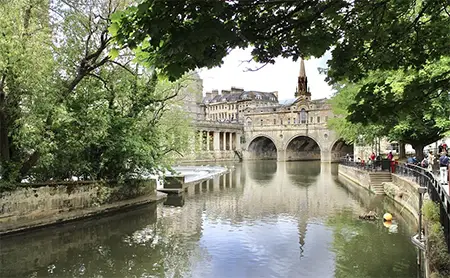
The main draw of visiting Bath comes from its rich history during two significant eras: the Roman and Georgian periods.
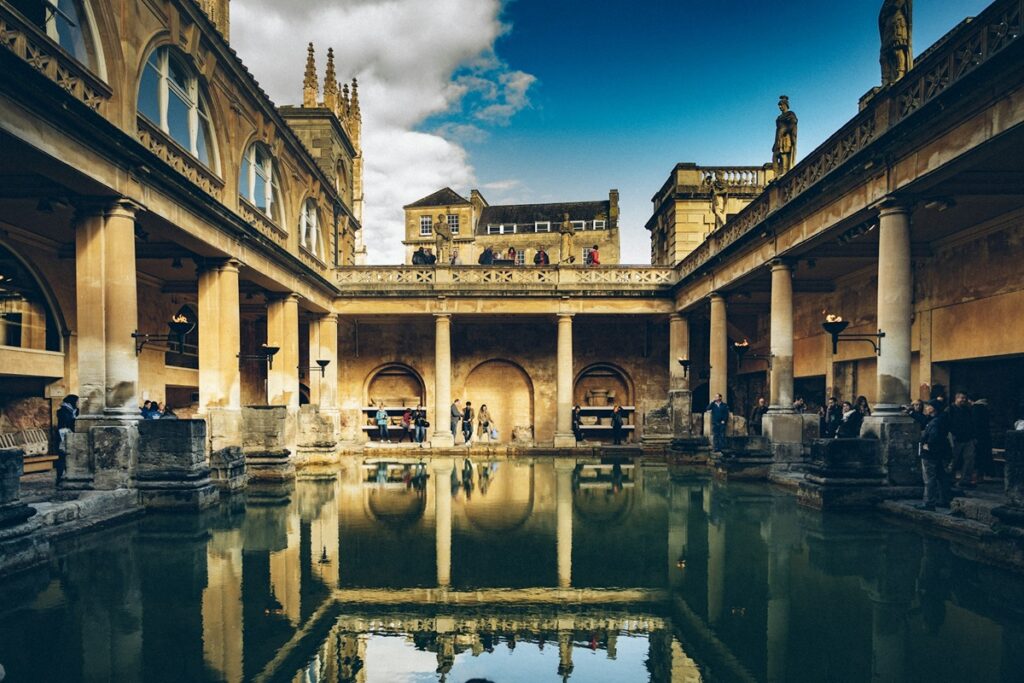
The natural resource of a hot spring from the waters of the surrounding Cotswold Hills was a great attraction to the Romans when they invaded England about 2,000 years ago. The resulting Roman Baths are the biggest single attraction for visitors.
The other significant era was the Georgian period during the 18th Century. Check out our Georgian Bath page, which details the society of that time and how residents turned Bath from a quiet town into a sophisticated spa destination that attracted the elite.
Sightseeing
We would heartily recommend that visitors with enough time take the free walking tours of Bath as an introduction to your visit.
These intriguing two-hour walks, led by volunteers, delve into the history of Georgian Bath as you stroll through the city, passing by all the important landmarks.
For more information on the city, the official tourist office can be located on the river (eastern) side of the Roman Baths by Bath Abbey.

Bath is a charming and prosperous town with a variety of shops to suit every preference. You can find everything from well-known chain stores along the bustling High Street to unique boutiques, quirky shops, and antique stores tucked away in the picturesque cobbled streets waiting to be discovered.
Not just a museum piece, it’s a major thriving town and a regional shopping centre. Part of its charm is that business and shops coexist with visitors within the Georgian Bath environment.
Shopping in Bath – more details
Getting to Bath from London – Tours or Independent Travel

The most painless way of visiting Bath is on a one or two day tour from London. Our most popular tour is the Windsor, Stonehenge and Bath tour. Visiting all three world class attractions in one day. For full details of the different kinds of tours visit our Bath Tours page.
However, these tours will only give you between 1 and a half and 3 hours to explore. (Unless you choose our make-you-own 2-day visit to Bath, where you can opt to have an overnight stay).
Additionally, it is very easy to travel independently from London. You can find full details on our Getting to Bath from London by public transport page.
For a day tour, regular fast trains run from London’s Paddington Station take only around 90 minutes and run until late. Frequencies are twice hourly for most of the day.
Cheaper, but slower are National Express buses from London Victoria, worth considering if you’re staying more than one day.
Tootbus: hop-on, hop-off sightseeing bus
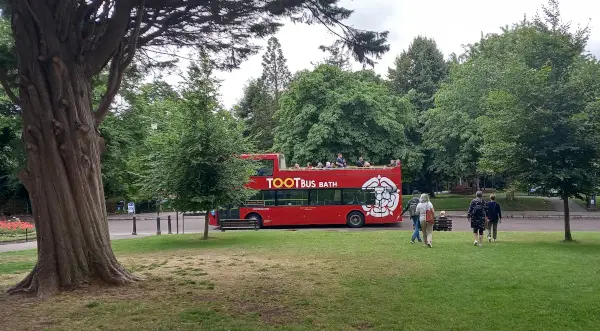
Bath is an incredibly walkable city, with everything conveniently located in a small area. From a practical standpoint, you really don’t need a hop-on, hop-off bus, although there is a tour available that showcases the Bath skyline from outside the city. That said, riding on the double-decker bus provides a great overall view, especially if you’re exploring on your own. The commentary can really help you get a feel for the city during your visit.
Tootbus (formerly called The Original Tour) also operate a very popular hop-on bus experience in London.
Hop-on, hop-off bus routes, frequencies etc
There are two routes covered by the same ticket. The core route (City Tour) covers the city itself and takes you to the Roman Baths, the Pump Room, Bath Abbey where England’s first King was crowned and the Assembly Rooms amongst others. In fact all the main attractions in the city.
The City Tour takes 50 minutes to do a full loop and runs every 20 minutes.
The second ‘Skyline Tour’ takes you from Bath Railway Station round Claverton Down past the University of Bath and Prior Park Landscape Garden.
The Skyline tour takes 45 minutes to complete a full loop and runs every 30 minutes. Both routes run between 10am and 5pm.
The tours feature contemporary double-decker buses similar to the ones shown in the photo. A live guide leads the tour in English, and headsets are provided for pre-recorded commentary in various languages, including Spanish, French, German, Italian, Japanese, Russian, Cantonese, Mandarin, and Polish.
When you purchase a ticket, it offers flexibility and can be validated at any time within three months from the date of purchase. Additionally, you’ll receive a complimentary booklet filled with deals and discounts for museums, restaurants, and local attractions.