

 Rome Toolkit
  Paris Toolkit
 Attractions in Bath
(Other than the main sights like the Roman Baths & Georgian Bath)
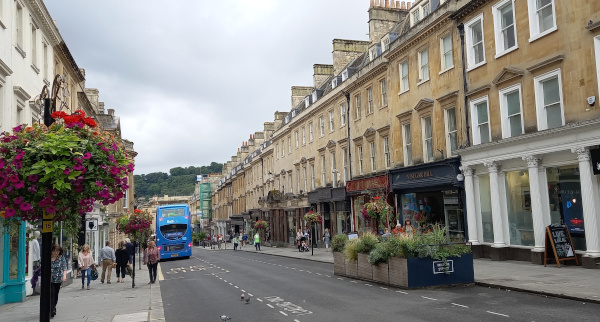
The Roman Baths in Bath are the single main attraction, but there is much else to Bath than the Roman Baths. A common complaint of visitors to Bath is they allowed too little time particularly those visiting as part of multi-stop coach tour from London.
On other linked pages we detail the Roman Baths, Georgian Bath, Thermae Bath Spa and Bath Abbey - the main tourist trail places as defined by the guide books.
We also have a page discussing the very popular free walking tour in Bath + Tootbus hop-on bus in Bath.
Bath is very compact and you can walk to all of the attractions both major and minor in a few minutes. All are very well signposted.
Bath is a very popular weekend break destination and always busy. Even in a long weekend you will not be able to cover all that Bath has to offer.
It should be emphasized that a lot of the joy of visiting Bath is just the general feel and buzz of the place, there is truly something for everyone to find - a great place to explore independently, your own treasure may be just around the next corner or down that alley.
Jane Austen in Bath
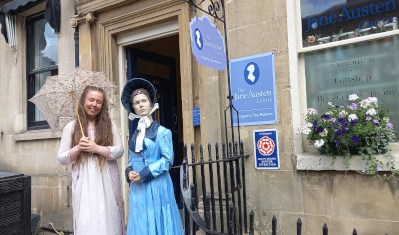
Jane Austen lived and wrote 200 years ago at the height of Bath's fashionable existence. Not that much has changed, you can still follow some of her walks from her books.
She lived at various addresses in Bath, one close by the Jane Austen Centre on Gay Street between The Circus and Queen Square.
As you would expect the Jane Austen Centre tells you all about Jane herself and the Bath she lived in.
You can do a Jane Austen Centre Bath tour from London including Stonehenge.
Pulteney Bridge in Bath
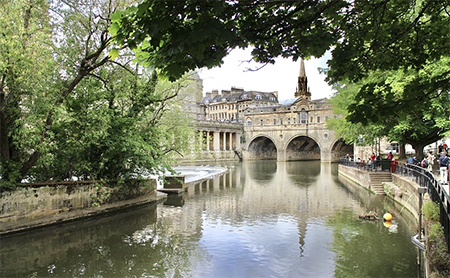
At the height of Bath's patronage during the 19th Century, the landowner on the other side of the River Avon to Bath City saw a money making opportunity. Why not build a bridge across to his land and extend Bath his way? He'd make a killing from property development.
The result is something that looks as if it came from Venice. One of the the few bridges in the world to host shops along the road on the bridge. Most people make this the object of at least one of their photos to remember Bath by.
Unfortunately, by the time the bridge and housing development was in place, Bath had gone out of fashion and the project never made any money.
Other attractions in Bath
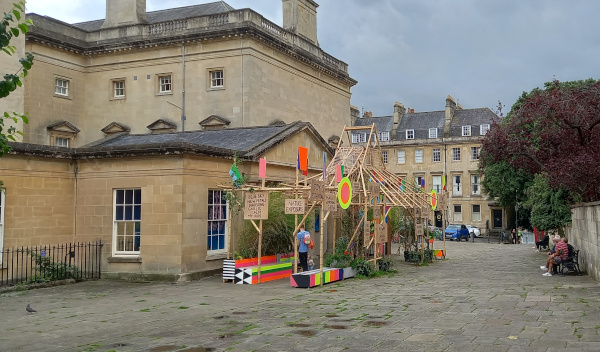
Bath Assembly Rooms
The Assembly Rooms were the hub of Georgian Society where everybody went to be seen. The rooms are just off The Circus, Jane Austen would have known them well. Again they were built by John Wood.
Bath Assembly Rooms are now owned by the National Trust, so you can get in for free if you are a member. They offer guided tours at selecte times if you pre-book (booking is essential anyway to get in).
See the National Trust Bath Assembly Rooms official website for more information on opening times and events.
No1 Royal Crescent
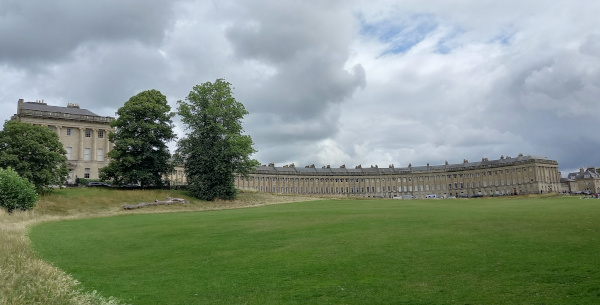
No1 Royal Crescent is a museum run by the Bath Preservation Trust which has been decorated and furnished just as it might have been during the period 1776-1796, and shows what life was like for the rich and fashionable (and their hard working staff) at this time. The Royal Crescent was one of the THE places to stay during Georgian Bath's seasons - see Georgian Bath page.
Building of Bath Museum
Explains how Bath went from the anonymous town it once was to what it is today.
Bath Postal Museum
Bath was the spot where the first letter to bear a postage stamp, (the penny black) was made.
Driven by the need to send messages for invitations to parties etc. in society Bath. Tells the story of everything you want to know about the mail and postal systems.
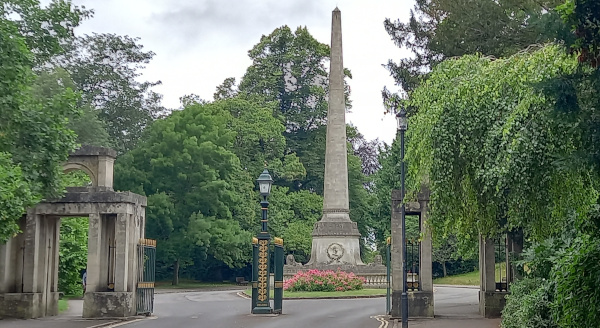
Victoria Park
Part of Georgian Bath, an elegant 57 acre park with formal gardens, bandstands. A place to promenade in your finest. The Royal Crescent overlooks the park and its less than 5 minutes' walk from the Roman Baths.
Recreation facilities; indoor and outdoor tennis, bowls, crazy golf, and refreshments in the cafe. Take a walk through the Botanical Gardens which boasts a wonderful display of flowers and trees.
Sally Lunn's House
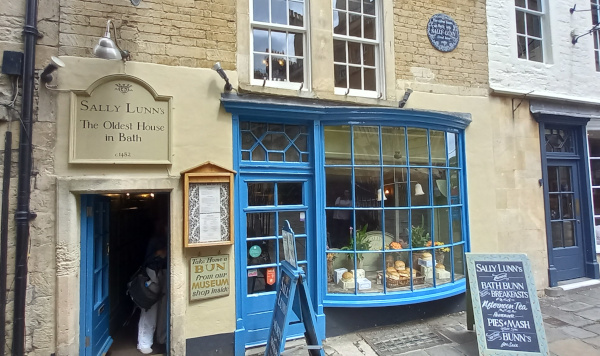
The oldest known house in Bath. The present timber-framed building dates from 1492 and Roman and Medieval remains have been found below the cellar floor.
Sally Lunn, a young French girl, did not arrive until 1680. She brought with her a recipe for the sweet, brioche-style bread that has become known as the Sally Lunn Bun.
The building is still a working tea room where you too can sample the buns. There is also a museum as well.
Shopping in Bath
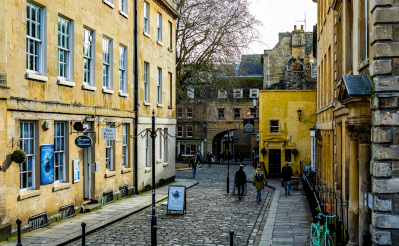
Apart from being one of the most popular visitor attractions in England, Bath is also a major regional shopping centre.
The centre has a full cross section of retail opportunities with a selection of small independent shops and stylish boutiques alongside the familiar big name stores.
Milsom Street
Bath has attracted fashionable society for more than two hundred years. The High Street or main Street is Milsom Street.
Jolly's was established here in the 1820s and was among the first department stores in the country. Today, it houses the leading retailer House of Fraser, but still retains much of the original character.
Milsom Street has most of the main multiple stores and extends down into a pedestrian area past the famous Roman Baths. It is normal to find a lot of street entertainers here.
You will want to explore down alleyways that lead off Milsom Street where many of the best places are.
Upper Town
Stroll around the Upper Town to discover a selection of antique shops in Bath which display a wide range of antiques including furniture, ceramics, glass, textiles, architectural antiques as well as books and maps.
Many commercial galleries can also be found in the Upper Town which offer contemporary visual arts for sale, changing exhibitions as well as talks and readings.
Guildhall Market
The Guildhall Market next to Bath Abbey is a normal market with all kinds of things at reasonable prices. Probably best of all is the building itself, a Grade II listed building, constructed in 1891.
Walcot Street
Walcot Street, a few hundred yards north of the shopping centre area past the Hilton Hotel is filled with a vibrant selection of independent craft and curio shops. From reclaimed antiques and furniture to clothes, pottery and bicycles.
MOST POPULAR TOURS FROM LONDON 2024
VISITING STONEHENGE AND/OR WINDSOR AND/OR BATH
| Stonehenge Morning Half Day Tour - from £65 |
| Windsor Castle Windsor Morning & Afternoon Tours - from £70 |
| Windsor, Bath & Stonehenge (inc Lunch, no adm Roman Baths) - from £99 |
| Windsor, Bath & Stonehenge (no Lunch, inc adm Roman Baths) - from £92 |
| Windsor, Stonehenge & Salisbury - from £85 |
| Windsor & Bath Day Tour - from £85 |
| Windsor, Bath & Stonehenge (Small Group - Max 16 people) - from £156.60 |
| Stonehenge & Bath (Stonehenge admission only) - 3.5 hrs in Bath - from £88 |
| Stonehenge & Bath (Stonehenge & Baths adm) - 3.5 hrs in Bath - from £116 |
| Stonehenge & Bath (Stonehenge & Jane Austen Centre) - 3.5 hrs in Bath - from £118 |
| Stonehenge & Windsor (featuring extended time at Windsor) - from £85 |
| Stonehenge & Avebury - from £114 |
| Windsor, Stonehenge & Oxford - from £79 |
| Stratford, Cotswolds, Bath & Stonehenge - from £128 |
| Stonehenge, Glastonbury & Avebury (Small Group) - from £156.60 |
| Bath, Cotswolds, Stonehenge & Avebury (Small Group) - from £156.60 |
VISITING COTSWOLDS AND/OR OXFORD AND/OR STRATFORD AND/OR WARWICK
| Oxford, Stratford & Warwick Castle - from £74 |
| Oxford, Cotswolds & County pub lunch (Small Group) - from £156.60 |
| Stratford & Cotswolds (inc Anne Hathaway’s) - from £85 |
| Full-day Cotswolds only Tour (Small Group) - from £127 |
| In-depth Cotswolds Only Tour + Lunch - from £127 |
| Blenheim Palace, Downton Abbey Village & Cotswolds Tour - from £72 |
| Stratford, Cotswolds, Bath & Stonehenge - from £128 |
| Windsor, Stonehenge & Oxford - from £79 |
| Oxford & Cambridge Tour (May-Sep only) - from £97 |
| Downton Abbey & Blenheim Palace (Small Group) - £156.60 |
VISITING CANTERBURY, LEEDS CASTLE & DOVER
| Small group Leeds Castle, Dover & Canterbury with river cruise - from £149 |
| Dover Castle, White Cliffs & Canterbury - from £125 |
| Canterbury, Dover & Kent Villages - £139 |
SPECIAL THEME TOURS
| Stonehenge Special Access (Walk Among Stones) Tours |
| Downton Abbey + Highclere Castle Tours |
| Harry Potter Tours |
| London Rock Tour |
DAY TOURS BY TRAIN TO LIVERPOOL, PARIS & SCOTLAND
| Beatles Liverpool Day Tour - £198 |
| Day Trip to Paris - from £259 |
| Day Trip to Edinburgh - from £225 |
2 TO 12 DAY TOURS COVERING GREAT BRITAIN, IRELAND, PARIS & AMSTERDAM
| 2-day Windsor, Stonehenge, Bath & Oxford - from £349 |
| 3-day Stonehenge, Glastonbury, Bath & SW - from £275 |
| 5-day Peak District, Wales & Yorkshire- from £425 |
| 2-day private Stonehenge, Bath, Cotswolds & Oxford - from £650 |
| Budget 3 days in Paris - from £289 (not currently available) |
| Luxury 2 & 3 days in Paris - from £399 (not currently available) |
| 2-day Edinburgh - from £312 |
| 3-day Edinburgh & Scotland Weekend - from £379 (not currently available) |
| 3-day Edinburgh & Scotland Anytime - from £999 |
| 6-12-day tours of Great Britain and Ireland - from £1425 |


