

 Rome Toolkit
  Paris Toolkit
 Visiting Georgian Bath - What to expect
Make an informed visit to Georgian Bath
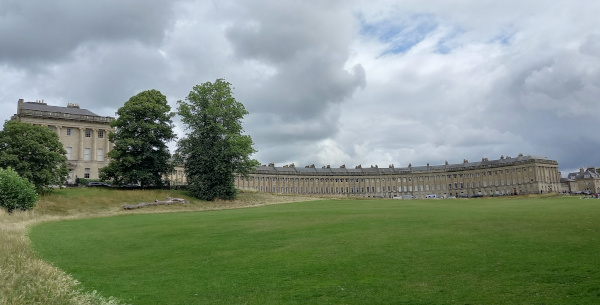
Designated by UNESCO as a World Heritage Site, Bath presents some of the finest architectural sights in Europe. Although the Roman Baths are perhaps the single main draw for visitors, it is the city itself, 'Georgian Bath' that normally leaves the fondest of memories.
Georgian Bath - how it started
Georgian Bath started in the 18th Century when England had a succession of Kings called George. The initial impetus came from visits in 1688, 1692, 1702 and 1703 by Princess/Queen Anne who visited Bath to take the waters. The frequency of her visits led to even greater aristocratic patronage.
Popular day tours from London visiting Stonehenge and Regency Bath
If you are in London and want to visit two world class sites in one spectacular day, there are two popular tours you can take combining the World Heritage Sites of Stonehenge and Bath.
One is a look at Jane Austen's world. Jane Austen was a Georgian woman well associated with Bath: Stonehenge and Bath with Jane Austen Centre from London.
The other includes a walking tour of the film sites of the popular series Bridgerton: Stonehenge & Bath with Bridgerton walking tour of 'Georgian Bath'.
Beau Nash
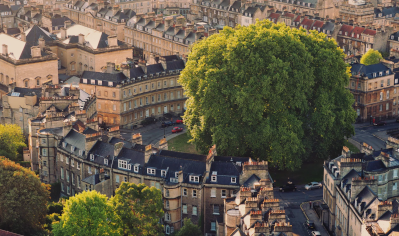
The cream of English society attracted people like Beau Nash, an opportunist and card shark. At that time Bath was a cramped city, crammed within its city walls. Beau Nash saw an opportunity by taking on the unpaid job of master of ceremonies.
He would meet new arrivals to the city and judge whether they were suitable to join the select "Company' of 500 to 600 people at the centre of Bath society.
He would match ladies with appropriate dancing partners at each ball, pay the musicians at such events, broker marriages, escort unaccompanied wives and regulate gambling (by restraining compulsive gamblers or warning players against risky games or card sharks).
Ralph Allen
Enter Ralph Allen, a local who had made a fortune organising the postal service into something that we might recognise today.
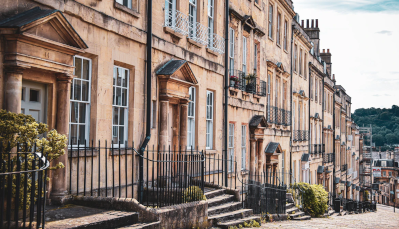
Ralph Allen had invested in some local limestone quarries, the honey coloured stone that characterises Bath's buildings today.
With this limestone an elegant new Bath was built, much of it on the green field sites just outside the city walls together with elegant parks and avenues which the rich could promenade and flaunt their riches.
John Wood
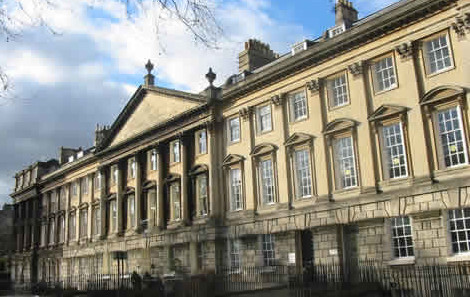
Ralph Allen's partner in this property development was John Wood the Elder, an English architect who was responsible for most of the landmark buildings we admire today.
John Wood's son, John Wood the Younger carried on after his father died, and proved just as accomplished.
The building style used was called Palladian architecture, a European style of architecture from Italy. The picture shown of Queen Square depicts what looks like a single grand building - in fact this is many individual buildings with a common frontage made to give the effect of a grand building - the Palladian style.
Grand buildings fit for the cream of society were built in this style, big enough to accommodate the aristocracy and their entourage.
The Circus and the Royal Crescent were two of the choice residential buildings which if rented would signify you had made it in society. Today, though private, you can visit one building (Number 1) in the Royal Crescent furnished as if in the Georgian Era.
Other infrastructure was built, parks to promenade in with bandstands for music to entertain. Down by the river, a broad pavement in which to promenade and show off your fashions.
Assembly rooms where as their name entails were where you would assemble and network during afternoon tea and dancing. The first theatre arrived. All this, you can get a real sense of today.
This was the age of Jane Austen who lived in Bath for some time. A couple of her books are set in Bath and today the Jane Austen museum is worthwhile.
Jane Austen museum Bath tour from London including Stonehenge.
Free walking tour of Bath
We only have touched upon the history and provided an outline of what Georgian Bath is all about. Do try and read up on the characters mentioned above and it will send you on fascinating tangents that will much enhance your visit.
We would very much recommend you take a free walking tour of Georgian Bath with one of the Mayor's volunteer guides.
Although free, these tours are very high quality taken by people proud to show their city to visitors.
The whole history of Georgian Bath will unfold in a two hour plus walking tour covering all that is worth seeing in Bath. You will identify what is of particular interest to you and probably realise at this point that you have not allowed enough time for your visit.
MOST POPULAR TOURS FROM LONDON 2024
VISITING STONEHENGE AND/OR WINDSOR AND/OR BATH
| Stonehenge Morning Half Day Tour - from £65 |
| Windsor Castle Windsor Morning & Afternoon Tours - from £70 |
| Windsor, Bath & Stonehenge (inc Lunch, no adm Roman Baths) - from £99 |
| Windsor, Bath & Stonehenge (no Lunch, inc adm Roman Baths) - from £92 |
| Windsor, Stonehenge & Salisbury - from £85 |
| Windsor & Bath Day Tour - from £85 |
| Windsor, Bath & Stonehenge (Small Group - Max 16 people) - from £156.60 |
| Stonehenge & Bath (Stonehenge admission only) - 3.5 hrs in Bath - from £88 |
| Stonehenge & Bath (Stonehenge & Baths adm) - 3.5 hrs in Bath - from £116 |
| Stonehenge & Bath (Stonehenge & Jane Austen Centre) - 3.5 hrs in Bath - from £118 |
| Stonehenge & Windsor (featuring extended time at Windsor) - from £85 |
| Stonehenge & Avebury - from £114 |
| Windsor, Stonehenge & Oxford - from £79 |
| Stratford, Cotswolds, Bath & Stonehenge - from £128 |
| Stonehenge, Glastonbury & Avebury (Small Group) - from £156.60 |
| Bath, Cotswolds, Stonehenge & Avebury (Small Group) - from £156.60 |
VISITING COTSWOLDS AND/OR OXFORD AND/OR STRATFORD AND/OR WARWICK
| Oxford, Stratford & Warwick Castle - from £74 |
| Oxford, Cotswolds & County pub lunch (Small Group) - from £156.60 |
| Stratford & Cotswolds (inc Anne Hathaway’s) - from £85 |
| Full-day Cotswolds only Tour (Small Group) - from £127 |
| In-depth Cotswolds Only Tour + Lunch - from £127 |
| Blenheim Palace, Downton Abbey Village & Cotswolds Tour - from £72 |
| Stratford, Cotswolds, Bath & Stonehenge - from £128 |
| Windsor, Stonehenge & Oxford - from £79 |
| Oxford & Cambridge Tour (May-Sep only) - from £97 |
| Downton Abbey & Blenheim Palace (Small Group) - £156.60 |
VISITING CANTERBURY, LEEDS CASTLE & DOVER
| Small group Leeds Castle, Dover & Canterbury with river cruise - from £149 |
| Dover Castle, White Cliffs & Canterbury - from £125 |
| Canterbury, Dover & Kent Villages - £139 |
SPECIAL THEME TOURS
| Stonehenge Special Access (Walk Among Stones) Tours |
| Downton Abbey + Highclere Castle Tours |
| Harry Potter Tours |
| London Rock Tour |
DAY TOURS BY TRAIN TO LIVERPOOL, PARIS & SCOTLAND
| Beatles Liverpool Day Tour - £198 |
| Day Trip to Paris - from £259 |
| Day Trip to Edinburgh - from £225 |
2 TO 12 DAY TOURS COVERING GREAT BRITAIN, IRELAND, PARIS & AMSTERDAM
| 2-day Windsor, Stonehenge, Bath & Oxford - from £349 |
| 3-day Stonehenge, Glastonbury, Bath & SW - from £275 |
| 5-day Peak District, Wales & Yorkshire- from £425 |
| 2-day private Stonehenge, Bath, Cotswolds & Oxford - from £650 |
| Budget 3 days in Paris - from £289 (not currently available) |
| Luxury 2 & 3 days in Paris - from £399 (not currently available) |
| 2-day Edinburgh - from £312 |
| 3-day Edinburgh & Scotland Weekend - from £379 (not currently available) |
| 3-day Edinburgh & Scotland Anytime - from £999 |
| 6-12-day tours of Great Britain and Ireland - from £1425 |


