

 Rome Toolkit
  Paris Toolkit
 Visiting Glastonbury Abbey
What to expect for visitors - the history of the Abbey and King Arthur legend
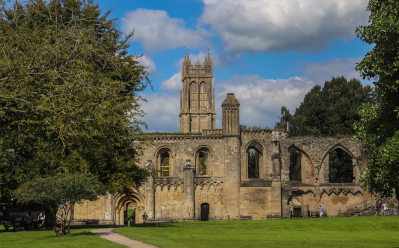
About Glastonbury Abbey
Glastonbury Abbey was established as a Benedictine monastery during the years 670 to 678 AD. Prior to that time, it had existed, for many years, as a Celtic religious centre.
According to legend, 2000 years ago Joseph of Arimathea (Christ's uncle) is supposed to have brought the young Jesus here.
On Joseph's second visit, after Christ's death, he built the first Christian church, at Glastonbury Abbey, (see our Glastonbury myths and legends page).
Visiting Glastonbury Abbey Glastonbury Abbey history King Arthur at Glastonbury Abbey Map of Glastonbury sights Tour visiting Glastonbury Abbey
Visiting Glastonbury Abbey
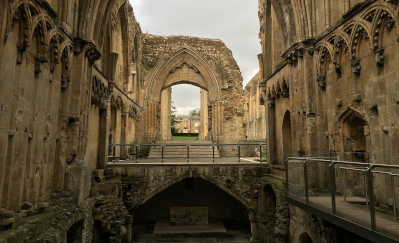
Glastonbury Abbey itself is very accessible, positioned just off the main High Street. Despite its very central position, its 38 acres make it very spacious inside.
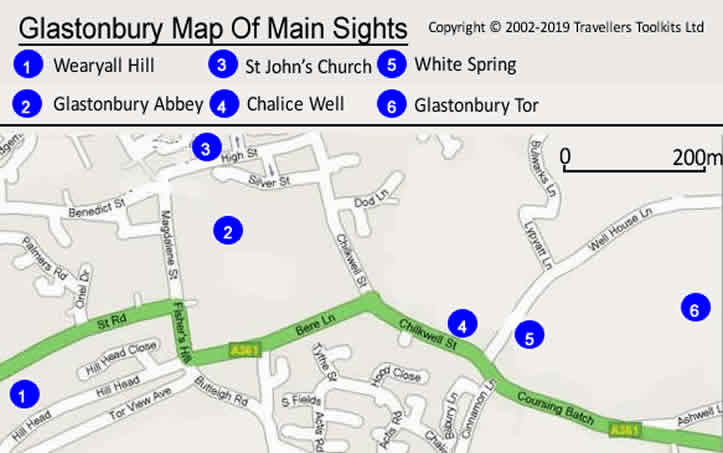
So you can locate the Abbey in Glastonbury, we have put together a map of the main sights of Glastonbury.
The main entrance where you pay admission fronts a large exhibition/museum which is worthwhile. Admission is reasonable; and it is strongly advised to prebook in advance. Kids go free (two children for each paying adult).
From here you can explore the grounds yourself or check out when the next costumed guide will take you on a tour, (recommended).
Nearest the entrance and museum area are the ruins of the Abbey within which is King Arthur's grave and the Thorn Bush. Beyond that the grounds stretch far and you will unearth nature trails and ponds within the grounds.
Glastonbury Abbey history
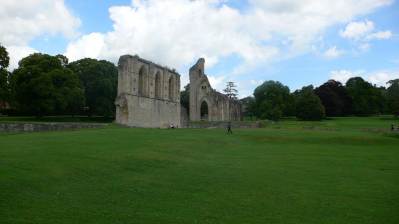
Glastonbury Abbey has in history been one of the most important religious places in the UK. During the Christian era great numbers of pilgrims flocked to the Abbey to venerate the relics of saints and sages, the most valued relics being those of St Patrick who ended his days at Glastonbury in 461 AD.
In 1086, when the Domesday Book was commissioned to provide records and a census of life in England, Glastonbury Abbey was the richest monastery in the country.
In the 14th century, the Abbey was the second wealthiest Abbey in Britain (behind Westminster Abbey), the Abbot of Glastonbury lived in considerable splendor and wielded tremendous power.
In 1536, during the 27th year of the reign of Henry VIII, there were over 800 monasteries, nunneries and friaries in Britain. By 1541, there were none. Glastonbury Abbey was one of principal victims of action by the King to break with the Catholic Church and establish the more frugal Church of England without need for monks and nuns.
Glastonbury, in addition to many other places, like Tintagel, has been linked to King Arthur. This link though, at Glastonbury, is in death rather than life.
King Arthur at Glastonbury
According to legend after Arthur's many exploits and stories concerning his Knights, the Round Table and the Holy Grail, he was wounded by Mordred at the battle of Camlann.
This was around the year 542 and he was then taken across the water to the Isle of Avalon for his wounds to be healed.
Glastonbury would indeed still have been an island at that time, so it was quite possible for a boat to bring him to the only place where any medical attention was available, which would have been at a monastery - Glastonbury Abbey.
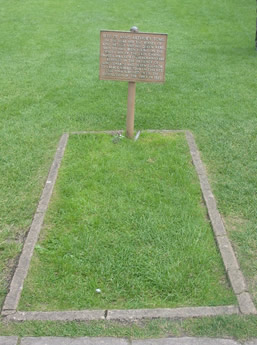
Arthur was mortally wounded however and it is said he was buried in the cemetery on the south side of the Lady Chapel, at Glastonbury Abbey.
Centuries later (in 1191) prompted by hints and rumours, the monks excavated this same spot in the cemetery and they dug down sixteen feet, to find an oak coffin.
At a depth of seven feet they found a stone beneath which was a leaden cross with an inscription 'His iacet inclitus Arturius in insula Avalonia' - variously interpreted to read 'Here lies King Arthur buried in Avalon'!
The coffin contained two bodies - a great man and a woman, whose golden hair was still intact, until touched, when it crumbled away. The bodies were explained as Arthur's and Guinevere's.
Cynics say the 'find' was an elaborate trick by the monks to generate publicity and funds after the Abbey was consumed by fire in 1184 when many of the ancient treasures were destroyed.
King Arthur's Realm day tour from London
Visiting Stonehenge, Glastonbury and Avebury
If you are a visitor from London and would like a really special day out to remember, there is one specialist guided small group tour, King Arthur's Realm.
This tour will take you into the hidden world of Avalon, a full day out covering many historical and spiritual sites, including Glastonbury as well as two other essential places of pilgrimage; Stonehenge and Avebury.
Out on Salisbury Plain you'll see the enigmatic World Heritage Site of Stonehenge. Here you'll witness up close the splendour of the magical stones, and discuss the possible theories behind Stonehenge's existence.
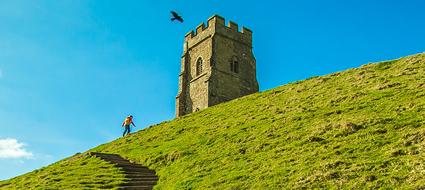
In Glastonbury you'll enjoy breathtaking views from the top of the famous Glastonbury Tor and discover secrets at the sacred Chalice Well (where the cup from the Last Supper was said to have been hidden in the First Century by Joseph Arimathea).
At Glastonbury Abbey you can and pay your respects to the grave of Arthur himself.
Finally, at Avebury you can walk the largest prehistoric stone circle in the world. Avebury is a magical place, with lots of ancient history with strong spiritual meaning for many people.
Expect a full day of druids, battles, magic and grail legends with your knowledgeable guide. Not to be missed.

SMALL GROUP STONEHENGE, GLASTONBURY & AVEBURY
Stonehenge, Glastonbury & Avebury Small Group guided day tour from London
Flexi adult from £174 • Best rate adult from £156.60 • Flexi child (3-15 years) from £154 • Best rate child from £138.60
• Small group day trip - maximum 16 people per tour • Admission to Stonehenge, Glastonbury Abbey & Avebury Stone Circle • Beat the crowds at Stonehenge - go there first! • Professional guide • Photo stop at Glastonbury Tor and entry to Chalice Well Gardens
MOST POPULAR TOURS FROM LONDON 2024
VISITING STONEHENGE AND/OR WINDSOR AND/OR BATH
| Stonehenge Morning Half Day Tour - from £65 |
| Windsor Castle Windsor Morning & Afternoon Tours - from £70 |
| Windsor, Bath & Stonehenge (inc Lunch, no adm Roman Baths) - from £99 |
| Windsor, Bath & Stonehenge (no Lunch, inc adm Roman Baths) - from £92 |
| Windsor, Stonehenge & Salisbury - from £85 |
| Windsor & Bath Day Tour - from £85 |
| Windsor, Bath & Stonehenge (Small Group - Max 16 people) - from £156.60 |
| Stonehenge & Bath (Stonehenge admission only) - 3.5 hrs in Bath - from £88 |
| Stonehenge & Bath (Stonehenge & Baths adm) - 3.5 hrs in Bath - from £116 |
| Stonehenge & Bath (Stonehenge & Jane Austen Centre) - 3.5 hrs in Bath - from £118 |
| Stonehenge & Windsor (featuring extended time at Windsor) - from £85 |
| Stonehenge & Avebury - from £114 |
| Windsor, Stonehenge & Oxford - from £79 |
| Stratford, Cotswolds, Bath & Stonehenge - from £128 |
| Stonehenge, Glastonbury & Avebury (Small Group) - from £156.60 |
| Bath, Cotswolds, Stonehenge & Avebury (Small Group) - from £156.60 |
VISITING COTSWOLDS AND/OR OXFORD AND/OR STRATFORD AND/OR WARWICK
| Oxford, Stratford & Warwick Castle - from £74 |
| Oxford, Cotswolds & County pub lunch (Small Group) - from £156.60 |
| Stratford & Cotswolds (inc Anne Hathaway’s) - from £85 |
| Full-day Cotswolds only Tour (Small Group) - from £127 |
| In-depth Cotswolds Only Tour + Lunch - from £127 |
| Blenheim Palace, Downton Abbey Village & Cotswolds Tour - from £72 |
| Stratford, Cotswolds, Bath & Stonehenge - from £128 |
| Windsor, Stonehenge & Oxford - from £79 |
| Oxford & Cambridge Tour (May-Sep only) - from £97 |
| Downton Abbey & Blenheim Palace (Small Group) - £156.60 |
VISITING CANTERBURY, LEEDS CASTLE & DOVER
| Small group Leeds Castle, Dover & Canterbury with river cruise - from £149 |
| Dover Castle, White Cliffs & Canterbury - from £125 |
| Canterbury, Dover & Kent Villages - £139 |
SPECIAL THEME TOURS
| Stonehenge Special Access (Walk Among Stones) Tours |
| Downton Abbey + Highclere Castle Tours |
| Harry Potter Tours |
| London Rock Tour |
DAY TOURS BY TRAIN TO LIVERPOOL, PARIS & SCOTLAND
| Beatles Liverpool Day Tour - £198 |
| Day Trip to Paris - from £259 |
| Day Trip to Edinburgh - from £225 |
2 TO 12 DAY TOURS COVERING GREAT BRITAIN, IRELAND, PARIS & AMSTERDAM
| 2-day Windsor, Stonehenge, Bath & Oxford - from £349 |
| 3-day Stonehenge, Glastonbury, Bath & SW - from £275 |
| 5-day Peak District, Wales & Yorkshire- from £425 |
| 2-day private Stonehenge, Bath, Cotswolds & Oxford - from £650 |
| Budget 3 days in Paris - from £289 (not currently available) |
| Luxury 2 & 3 days in Paris - from £399 (not currently available) |
| 2-day Edinburgh - from £312 |
| 3-day Edinburgh & Scotland Weekend - from £379 (not currently available) |
| 3-day Edinburgh & Scotland Anytime - from £999 |
| 6-12-day tours of Great Britain and Ireland - from £1425 |


