
Westminster Abbey Tickets & Tours
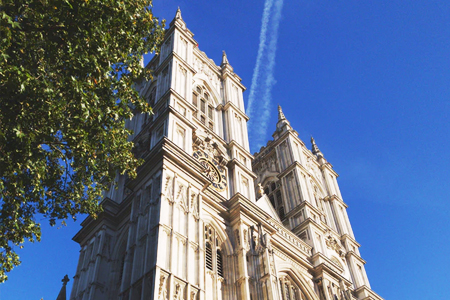
Westminster Abbey – Setting for every Coronation since 1066 and for numerous royal weddings
Since that time, the Government has always centred itself on Westminster, with the City of London to the east serving as the focus for commercial activity.
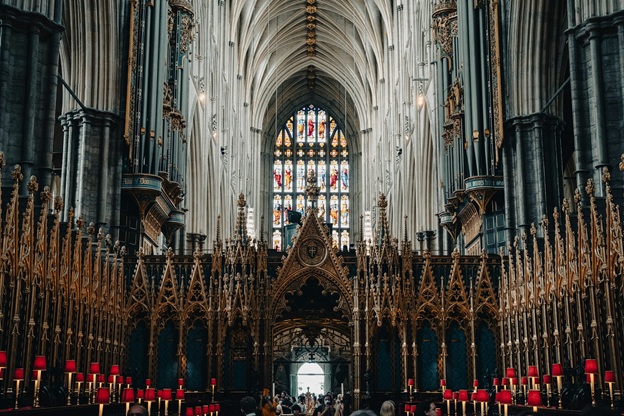
Every year Westminster Abbey welcomes over one million visitors and is very much part of the standard tourist trail complete with large coach parties. People should remember that the Abbey is very much a working church. They close it on Sundays for worship, and they regularly apply restrictions ad hoc in response to religious events.
For a really special day out we also offer a full Royal London Experience: Royal London tour with Westminster Abbey & Afternoon tea.
Visit our major royal palaces & castles in and around London page for more information on Royal days out in London.
Westminster Abbey history

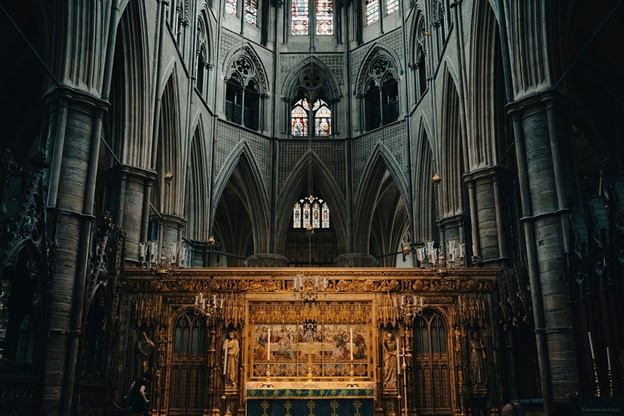
Henry III initiated the current church in 1245. By the 16th century, during the Tudor era, Westminster Abbey had established itself as the venue for coronations, royal weddings, and state funerals.
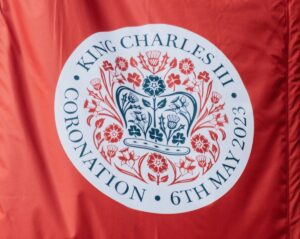
Every monarch since William the Conqueror, with the exception of Edward V and Edward VIII, has crowned themselves in Westminster Abbey. The earliest recorded coronation at this location was that of William the Conqueror in 1066, while the latest took place on May 6, 2023, for His Majesty King Charles III. Before King Charles, they held the last coronation for Her Late Majesty Queen Elizabeth II on June 2, 1953.
Notably, the choice to broadcast Queen Elizabeth II’s coronation on television in 1953 allowed the public to experience the entire ceremony like never before. This significant event marked a turning point in how the world shared royal ceremonies, making them accessible to millions who could watch from their homes.
The tradition of coronations has continued to evolve, reflecting both history and modernity, as seen in the recent celebrations for King Charles III.
The Benedictine monastery at Westminster was dissolved in 1540 as part of the impact of Henry VIII’s creation of the Church of England breaking away from the Catholic Church. Since then Westminster Abbey has just performed the role of church.
Westminster Abbey opening times
Open to visitors from Monday to Saturday throughout the year.
General Opening Times
Monday – Friday: 9:30am – 15:30pm
Saturday: 9.00am – 15:00pm
Sunday: Open for services
As a fully working church, Westminster Abbey is subject to closures at short notice, so please check opening times on the official Westminster Abbey website prior to visiting.
On Sundays and religious holidays such as Easter and Christmas, the Abbey is open for worship only. However, all are welcome and it is free to attend services.
Westminster Abbey shuts its doors to visitors one hour after the stated closing time, so it’s advisable to allow yourself ample time to explore.
How to get to Westminster Abbey
Located on Parliament Square facing the Houses of Parliament and Big Ben. The London Eye, 10 Downing Street, London Dungeon and Churchill War Rooms are major London attractions within 5 minutes’ walk. Buckingham Palace is a 10-minute walk across St James’s Park.
Nearest Underground station
Westminster Underground Station is on the other side of Parliament Square to Westminster Abbey. Trains on the Circle, District and Jubilee Lines stop at Westminster.
Hop-on, hop-off buses & river services
All of London’s hop on, hop off sightseeing buses have stops at Westminster Abbey.
Westminster Pier is on the other side of Parliament Square by Westminster Underground Station and is one of London’s busiest river service piers with many services including the very popular service to the Tower of London.
Tickets, queues and audio-guides
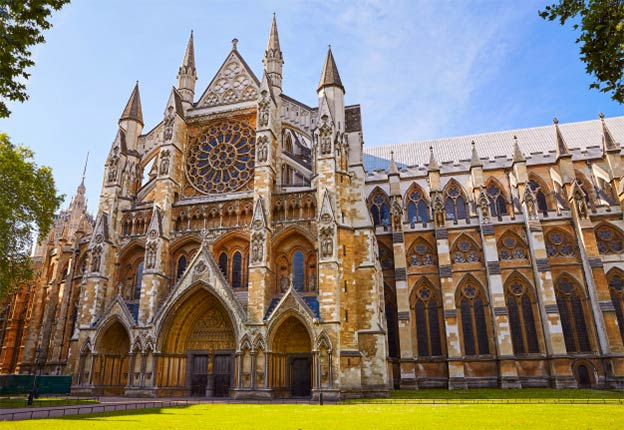
Westminster Abbey is one of London’s main visitor attractions, the busiest time of all for visitors is July and August but it is busy at all times.
Long entrance queues are a normal sight on arrival.
Best times for independent visitors is to be there for opening before the tour groups and school parties start arriving.
On Wednesday afternoons the Abbey is normally open until 6pm – this is not well publicised and for many the best part is that no groups or tours are allowed inside at these extended hours.
Audio-guides
Each entry ticket includes access to complimentary audio guides. These guides are offered in a variety of languages, including British Sign Language, German, French, Spanish, Italian, Russian, Portuguese, Polish, Dutch, Hungarian, Mandarin Chinese, and Japanese, in addition to English.
You have the option to download the condensed version of the guide onto your mobile device or tablet, or you can utilize one of the devices available at Westminster Abbey. The English commentary is provided by the Oscar-winning actor, Jeremy Irons.
Tickets
Ticketing is straight forward with concessions for children and seniors and no discounting, including on-line.
You can buy your tickets online ahead of time, and you’ll need to specify the date of your visit.
Around Westminster Abbey
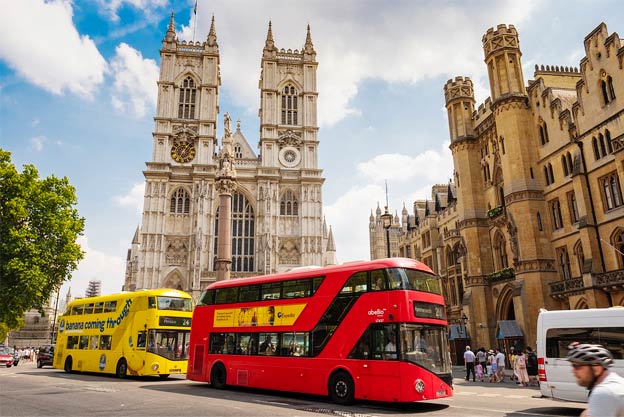
Westminster Abbey is at the heart of a small district that contains lots of London’s A1 attractions. Big Ben, Buckingham Palace and the London Eye are just some of the “Must Sees” within a few minutes’ walk.
Although very short, you could do the walk in well under an hour without stops at an easy pace, most people will take a day or more, there is so much to see, do and be diverted by.
Visit our London Icons self-guided walk page for more information.
Westminster self-guided walk map

Westminster Palace and the Elizabeth Tower commonly known as Big Ben

Parliament Square is a small public area surrounded by significant landmarks, including Westminster Abbey and the Palace of Westminster commonly known as the Houses of Parliament.
UK Parliament
The Palace of Westminster is the venue where the British government convenes to manage the country’s political affairs. Its most famous landmark is The Elizabeth Tower, commonly known as Big Ben, which is named after the iconic large bell of the clock that has come to represent London.
When parliament convenes in the evening, the Ayrton Light illuminates the summit of the Elizabeth Tower. During these sessions, security protocols are intensified.
Visit Parliament
It is possible to arrange tours, visit debates in the chamber, or even climb the Elizabeth Tower. However don’t expect just to turn up and walk in. For UK residents going through their own MP it is much easier than for foreign visitors who can only tour during the summer opening with tickets purchased in advance.
Official UK Parliament website
Parliament Square
Directly across from the Houses of Parliament lies Parliament Square. In the spacious green area at its center, you will often find political protesters with placards and occasionally tents. This is a well-known tourist destination, providing views of notable landmarks such as Westminster Abbey and Big Ben.
This central area is not solid earth, if a heavy vehicle strayed onto the green there is a chance it may fall into the London Underground line below!
Westminster Palace and Saint Margaret’s Church

Saint Margaret’s Church stands between Westminster Abbey and the Houses of Parliament and is commonly called “the parish church of the House of Commons” on account of it being so handy for politicians on the other side of the road.
Saint Margaret’s Church is impressive in its own right, a lot of visitors enter mistaking it for Westminster Abbey next door.
The reason why two such great churches are adjoining is that Westminster Abbey was originally a Benedictine Abbey.
Combine Westminster Abbey with a hop-on hop-off sightseeing bus ticket
Golden Tours is one of the three main hop-on, hop off sightseeing bus companies in London. A great package is to combine Westminster Abbey with a hop on bus tour, saving you pounds on purchasing separately. Hop on tours are excellent for your first day in London, quickly getting you up to speed and orientated with the layout of London and your guide pointing out sights and destinations you might have not previously considered visiting.
From your hop-on bus tour see sites such as the Tower of London, Shakespeare’s Globe and spectacular Westminster Abbey, as well as, of course, Buckingham Palace, as well as many more iconic London scenes.
With the 24-hr and 48-hr tickets you also get a Thames River Cruise thrown in for free. Cruise from Westminster to St Katharine’s Pier, and soak in panoramic views of the capital’s most iconic landmarks for a sightseeing experience like no other!
All this on top of entry to the 700 year old Westminster Abbey.