
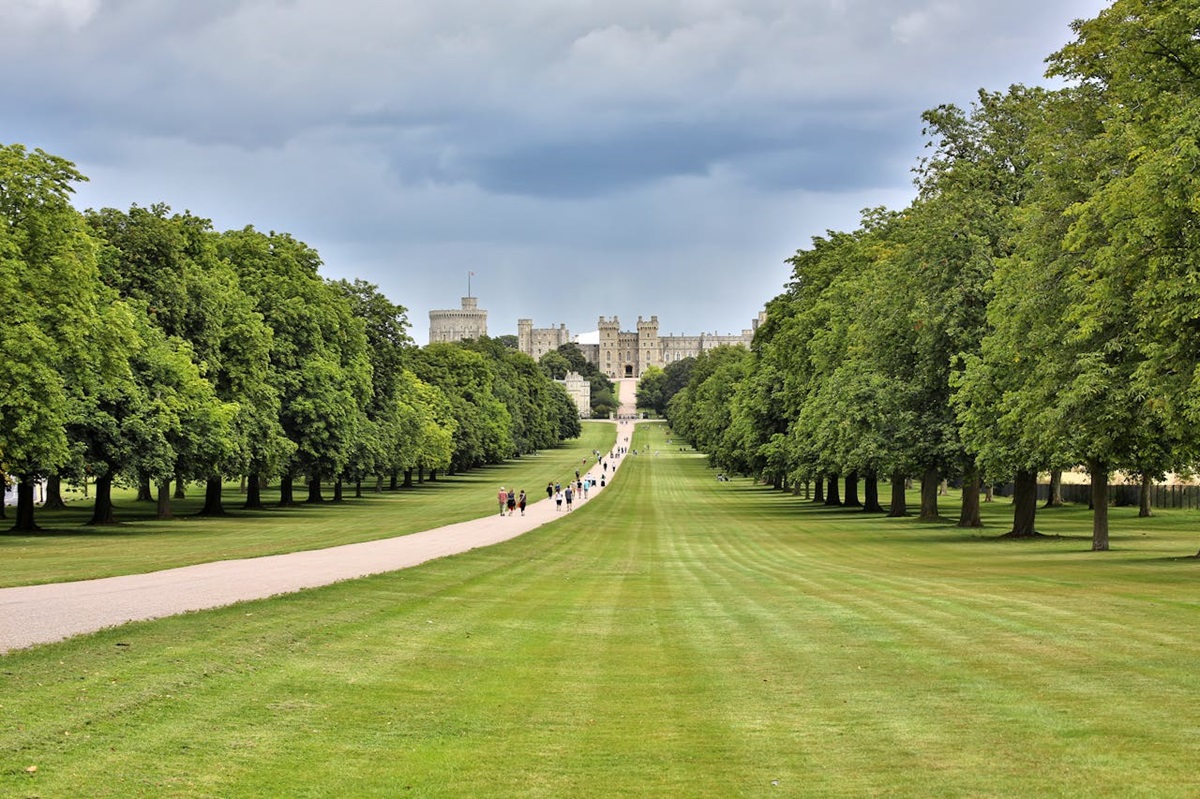
Windsor Castle Tour Tickets
History
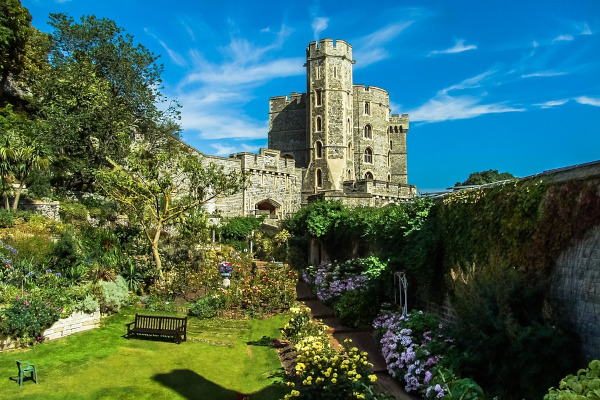
Windsor Castle has been the venue for many royal weddings over the years, captivating audiences around the globe. This makes it a must-visit destination for anyone traveling to London.
Visitors to Windsor Castle are often amazed at how well-preserved and functional this historic building remains.
Tours
Windsor Castle tours remain ever-popular. Remaining good value if you want to combine into a top day out with somewhere like Stonehenge or Bath.
Looking for more royal adventures in London? Visit our Royal Palaces and Castles in London page for highlights of the best royal palaces and castles to explore.
Windsor Castle – tickets
Cheapest Windsor Castle tickets
To secure the most affordable tickets, it’s best to book online ahead of time. This approach can help you save a few pounds for each person.
There is a young person rate for 18-24 year olds, as well as a child price type for 5-17 year olds inclusive. Under 5s remain free.
Families can take advantage of a family discount when booking for at least one adult and two children.
If you’re part of a group of 15 or more, you can enjoy significant savings.
Book in advance to cut down on costs and avoid long lines.
Whilst you can buy tickets on the day for ultimate flexibility, you will save money of you book in advance an ensure a smoother entry.
Visitors find Windsor Castle very busy, particularly at peak times, so we strongly recommend booking in advance.
Buying tickets from online platforms provide you with immediate confirmation, allowing you to easily download the eTicket directly to your mobile device.
We currently don’t have any information about discounted tickets for visitors that are cheaper than the advance ticket prices. However, some vendors may have higher prices than others, so it’s a good idea to compare before purchasing. We always strive to provide the best possible ticket options at the lowest prices.
Prices
Adult: £31 Advance £35 On the day (subject to availability).
Young Person: (18-24) £20 Advance £23 On the day (subject to availability).
Child: (5-7) £15.50 Advance £17.50 On the day (subject to availability).
Disabled Person: £15.50 Advance £17.50 On the day (subject to availability).
Access Companion: Free
Under 5: Free
Windsor Castle – opening times
They close the Castle on Tuesdays and Wednesdays.
1 March – 31 October: 10:00-16:15 Last admission 15:00
1 November to 29 February: 10:00-17:15 Last admission 16:00
Changing of the Guard and closures
The Changing of the Guard takes place between 11:00 and 11:30 AM, contributing to the morning hustle and bustle. Most coach tours typically remain until about noon, leaving after the ceremony concludes.
St George’s Chapel
St George’s Chapel welcomes visitors on Monday, Thursday, Friday, and Saturday, but on Sunday, they reserve it solely for worship and do not include it in the visiting hours.
Check the official Windsor Castle website, as officials might close the castle for state visits and special events. There, you’ll also find information about the days when the Changing of the Guard occurs during winter and the seasonal closing times.
It follows that if you’re an independent visitor during the summer months, a good strategy is to visit the other attractions of Windsor & Eton during the morning and visit the castle after lunch. Visitor numbers are also much higher at weekends than during the week (and as such tickets for these peak times are now a little more expensive).
The location of Windsor Castle
Windsor Castle is quite simple to locate. As you exit either Windsor and Eton Central Station or Windsor and Eton Riverside Station, you’ll spot the castle walls directly ahead. You will find the main entrance to Windsor Castle at the top of Castle Hill, to your right.
Address: Castle Hill, Windsor, SL4 1PD. Google Maps
How long will your visit take and what queues will there be?
In the winter months, when there are typically no queues, most visitors spend about 90 minutes to two hours exploring the Castle. However, the official Windsor Castle website recommends allowing three hours or more for a visit.
During peak times in the summer months, there are often long queues, especially at the entrance to the State Apartments.
Entrance, exits and security at Windsor Castle
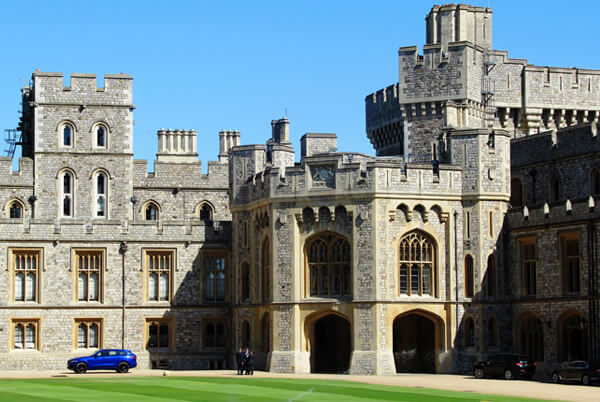
On paying your admission, you pass through airline-style security where staff put bags through an x-ray machine, and you empty your pockets and pass through a detector door. Once through the security you pick up your audio phone at the kiosk opposite.
There is an information desk, toilets and gift shop here too. By the audio kiosk is a sign that details the times of the guided tours that day. It is from here these tours start.
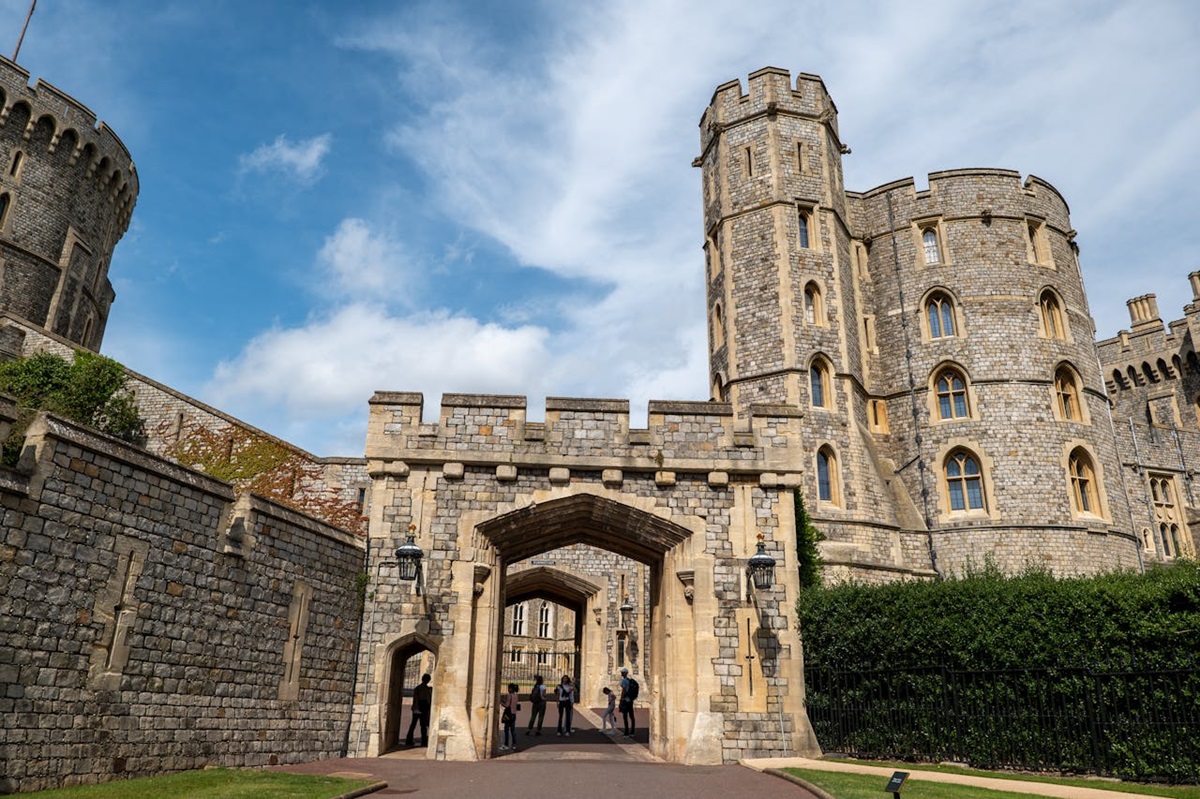
Please note, the exit is from the main Windsor Castle Henry VII Gate, not the entrance with the ticket desks.
Multimedia tours and photography at Windsor Castle
Multimedia guides
A multimedia guide is part of the admission price, available in ten languages and provides a lively commentary throughout your tour of the castle.
Additionally, a separate family multimedia guide for children aged 7-11 is available in English.
Separate guides are available for those with hearing or sight loss.
In person guided tours
Regular classic guided tours depart from close to the entrance on a set schedule and typically last about thirty minutes.
Photography
The State Apartments and St George’s Chapel do not allow photography or video recording. Additionally, the State Apartments and St George’s Chapel do not permit eating and drinking. Staff will ask visitors to place drinks and food in closed bags before admitting them to the castle. Bottled water can purchase at the Courtyard Shop.
Changing of the Guard at Windsor Castle
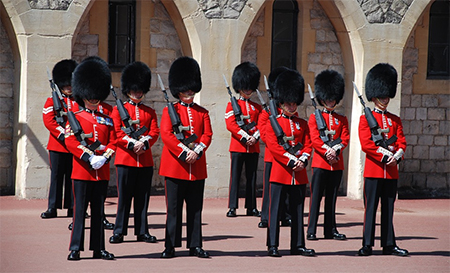
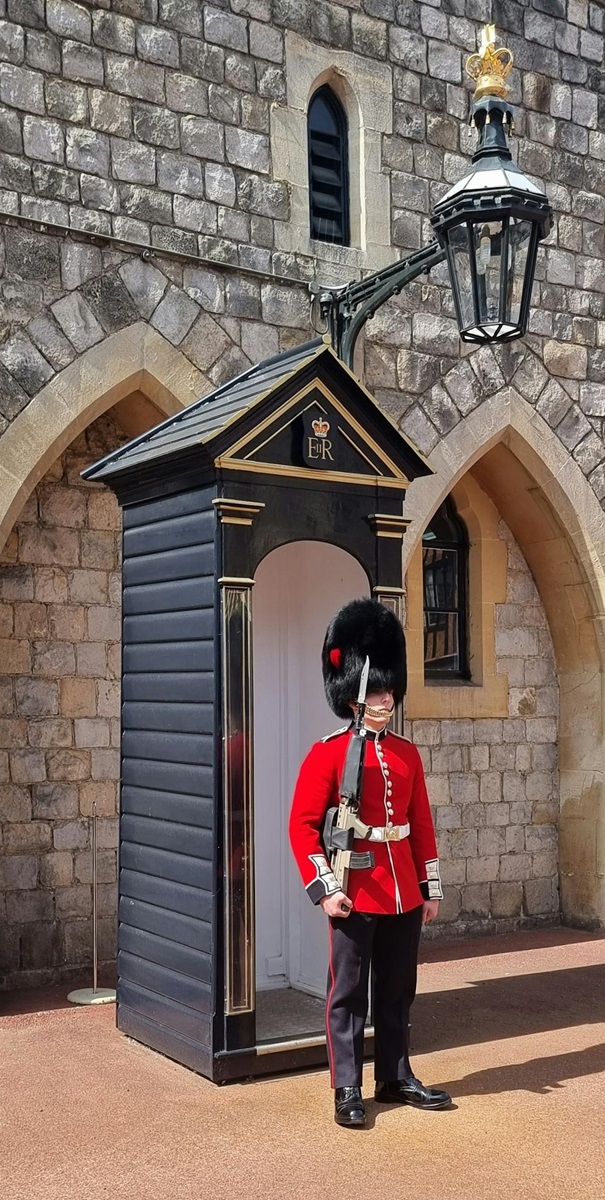
Many visitors like to time their visit so they can view the Changing of the Guard. This is very similar to that practiced in central London at Buckingham Palace or Horse Guards.
Changing of the Guard at Windsor usually takes place at 11am within the Castle grounds Mondays to Saturdays from April until the end of July and on alternate days for the rest of the year, weather permitting.
If you’re not planning to visit the Castle, you can still catch the band as they march through the town around 11am. The barracks is approximately 500 meters from the castle, and the band will pass by the Guildhall and Old Town before making their way back to the castle at the statue of Queen Victoria.
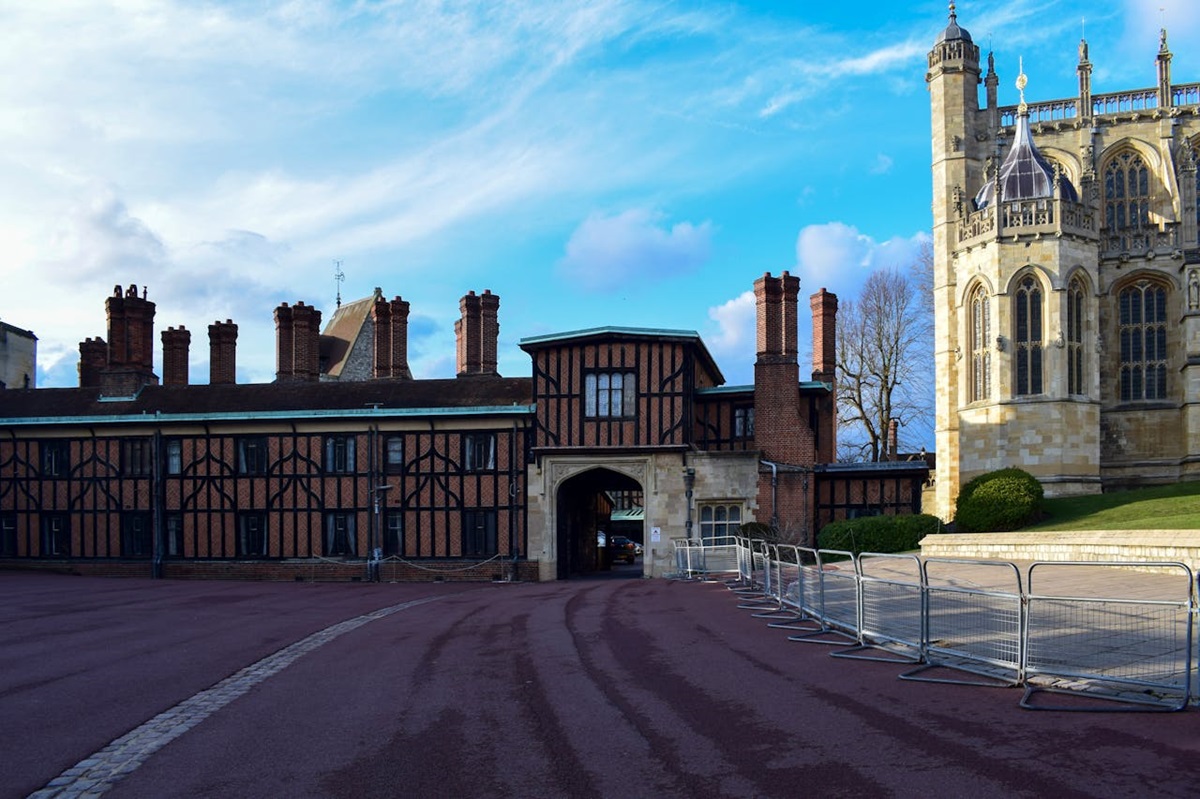
To fully appreciate the ceremony during your visit to the Castle, it’s recommended to gather in the parade ground near the main exit, right in front of St George’s Chapel. The whole ceremony takes around thirty minutes.
State Apartments
Most people after getting their introductions and briefings about the castle on their tour will make their way past the moat of the Round Tower (not open to the public) up to the north terrace. It is here that the entrance to the State Apartments is situated.
From the north terrace you gaze down to Windsor town below and get far reaching views of the surrounding countryside. Windsor town looks much smaller from up here.
2019 restoration and opening of the State Entrance Hall
In 2019 Windsor Castle went through an extended period of restoration of the inner Hall, formerly closed to the public. The Inner Hall (closed by Queen Victoria) leads visitors to the State Entrance Hall, where guests of the Crown are welcomed to Windsor, a magnificent welcoming area.
From the Inner Hall Visitors can visit the State Apartments, Semi-State Rooms and Queen Mary’s Dolls’ House. The Dolls’ House is precisely what you’d expect, a single miniature dolls’ house suitable for royalty complete with miniature crown jewels.
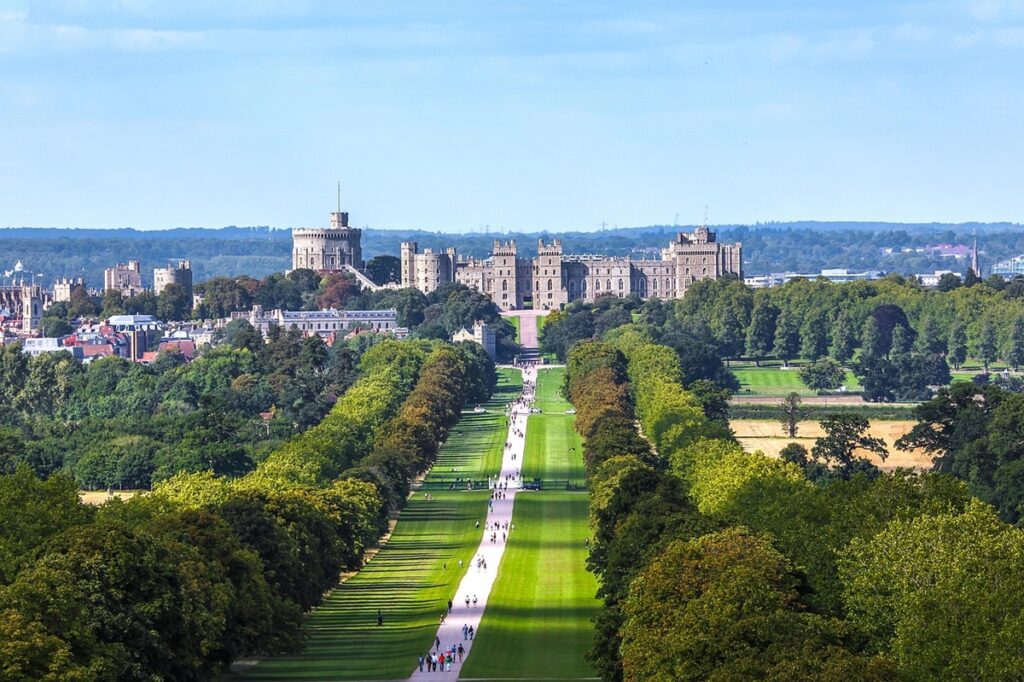
Much of the southern part of the State Apartments was destroyed by fire in 1992 and has been restored. Arguably your experience is much the better for it; some of the rooms that were beginning to look faded and antique now really do bring alive what the original rooms would have looked like on completion.
Such are the treasures that you can perhaps look at an obscure painting only to realise that your are inches from an original Rubens when looking at the information on it.
St George’s Chapel
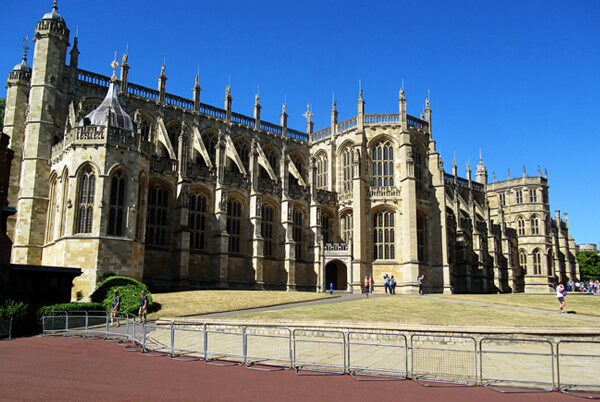
If you’re entering the castle from early afternoon onwards it is worth making St George’s your first port of call.
St George’s Chapel is an active church that holds services daily. On Sundays, the chapel is not open to visitors due to ongoing services throughout the day. Everyone is invited to join in the worship. Additionally, the chapel closes earlier than the rest of the castle to get ready for the evening service.
More recently, Prince Harry and Meghan Markle’s royal wedding was held in St George’s Chapel. Another Royal wedding at Windsor followed shortly afterwards when Princess Eugenie and Jack Brooksbank tied the knot in St George’s Chapel.
The chapel also houses the tombs of ten monarchs, including Henry VIII and his third wife Jane Seymour, as well as Charles I. The Gothic architecture is truly impressive, especially the ceiling.
One of the most intriguing aspects that sets this chapel apart from other churches and abbeys is its connection to the Order of the Garter. This prestigious order, known as the oldest national order of knighthood still in operation, has a rich history that dates back to the reign of King Edward III during medieval times.
Membership of the Order is extremely limited and includes the monarch of the United Kingdom, and not more than twenty-four companion members. St George’s is home to the Order, as St. George is patron saint and also patron saint of soldiers and also of England. Members are each assigned a stall in the chapel choir above which his or her heraldic devices are displayed.
Windsor Castle tours
There are many different tours visiting Windsor Castle, just a couple of them are half day tours only to the castle, not including another attraction.
However, because Windsor is relatively close to London many tours have Windsor Castle as part of a day long tour, including other attractions such as The London Eye, Hampton Court, Buckingham Palace or further afield, Stonehenge.
Windsor Castle & London’s attraction passes and promotions
The London Pass can save you £££’s on walk-up entry prices for over 90 of London’s top attractions.
Included in the pass are the Tower of London, Kensington Palace, Windsor Castle, Kew Palace & Gardens, The King’s Gallery, and Hampton Court Palace.
Other top attractions on the London Pass list include the London Eye, Tower Bridge, St Paul’s Cathedral, London Bridge Experience, Big Bus, Madame Tussauds, Chessington World of Adventures, London Zoo, The View from the Shard, Westminster Abbey, plus many more!
The London Pass offers incredible savings over buying individual attraction tickets.