

 Rome Toolkit
  Paris Toolkit
 The Cotswold region from London
Villages of the Cotswolds to be visited & how
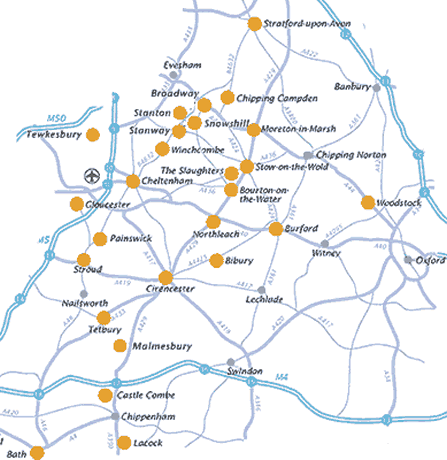
The Cotswolds is a range of hills in west-central England, an area 25 miles (40 km) across and 90 miles (145 km) long.
Just outside the boundaries of this region are several major towns attractive to visitors - Stratford Upon Avon, birthplace of Shakespeare north of the region, Oxford east of the region and Bath to the south west. The area is characterised by attractive small towns and villages built of the underlying Cotswold stone (a type of limestone).
During the 13-15th centuries, the medieval period, native Cotswold sheep were famous throughout Europe for their heavy fleeces and high quality of wool. Cotswold wool commanded a high price and the wealth generated by the wool trade enabled wealthy traders to leave their mark by building fine houses and wonderful churches, known as “wool churches”. Even today, sheep on the hillside is one of the classic Cotswold images.
For overseas visitors the Cotswold area is convenient for London and offers what many people portray as typical English countryside with quaint villages, historic churches and peaceful surroundings.
For many the highlight is to take a traditional cream tea in a traditional tea room and walk it off browsing around a picturesque village or craft shops.
For the purposes of navigation, this page divides the geographical region of the Cotswolds into Southern Cotswolds, Central Cotswolds and Northern Cotswolds.
Getting to the Cotswolds from London
There is very limited public transport in the Cotswold region. For practical purposes most visitors will need a car or arrive on a tour bus.
Trains from London's Paddington Station venture into the Cotswolds. The only line that goes through the heart of the Cotswolds runs from Oxford through the Cotswolds to Hereford and Worcester. Moreton in the Marsh being the main station about a 90 minute journey.
Also from Paddington you can take an alternative line to Gloucester stopping at Kemble Station, just south of Cirencester. There are bus links to Moreton in Marsh, Stow on the Wold, Bourton on the Water, Northleach, Cirencester and Tetbury from outside the station.
The bus network within the Cotswolds is limited and if used as the basis of your visit will be main factor framing what you see and do.
The region is ringed by a triangle of motorways. From London the most common approach would along the M40 and entering the region from the east.
From London a favourite approach would be up the M40 to Oxford from London, perhaps entering the Cotswold region at somewhere like Burford.

TRAIN TICKETS

Day tours to the Cotswold region from London
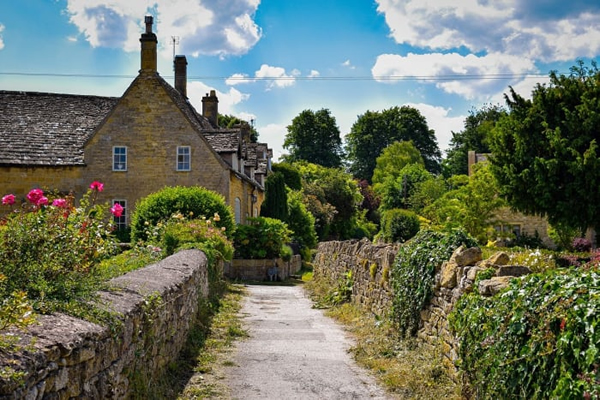
Most day tours that say they visit the Cotswolds in reality are little more than a drive through on tour combinations that involve Oxford, Stratford Upon Avon and Warwick Castle.
However there are exceptions for those who want to spend the day visiting the Cotswolds specifically, some options being small group tours where knowledgeable drivers can get you down the lanes and unspoilt villages not visited by the tour bus crowds.
Southern Cotswolds (Close to Bath)
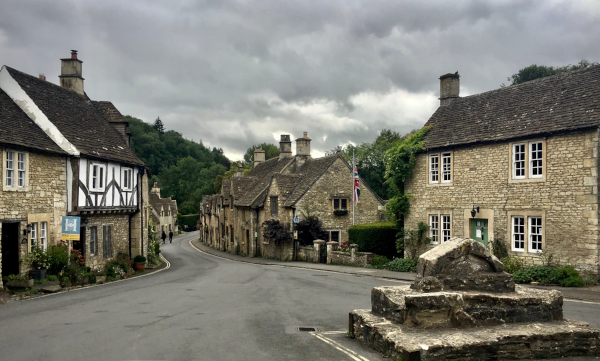
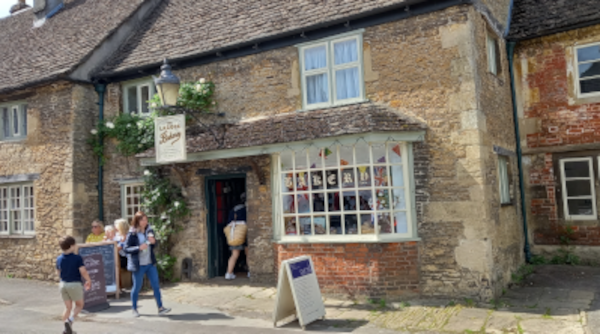
The southern part of the Cotswolds is easily accessible from London by the M4 motorway.
Castle Combe
In the southern area Castle Combe is a good village to visit if you want a taste of a typical Cotswold Village handy to combine with Bath (only 30 minutes away) or even Stonehenge.
Set in a deep river valley the village (an old wool town) has tea rooms, interesting church, picturesque houses and river running through the village with very good walking in the district to other villages.
There is no castle left at Castle Combe, but you do have one of the least uncommercialised of the Cotswolds villages without the tour coach crowds of some other villages further north. The properties are many hundreds of years old and are listed as ancient monuments.
Lacock
One of the prettiest villages in England, owned by the National Trust - a village 'frozen in time'. Lacock is not really a typical Cotswold village. The houses span the centuries, dating from medieval times to the 18th century, but none is later than about 1800.
The George Inn, an authentic 13th century inn is a great place to have lunch and is the oldest licensed pub in England. The village has been used for many period films including Jane Austen and more recently Harry Potter.
Lacock Abbey, beside the village is one of the few abbeys to survive Tudor times.
Central Cotswolds
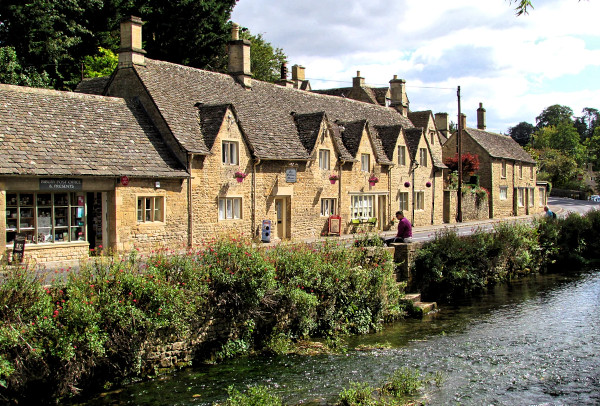
From London the central area of the Cotswolds is most popular. Oxford and nearby Blenheim Palace is a major gateway to the region.
Burford
For many people, Burford, another old wool town, is the gateway town into the Cotswolds. One of the larger conurbation's, the main High Street descending down to the river with some of its best 17th and 18th century frontages is the main focus for visitors. Burford is a renowned centre for antiques, teashops and gift shopping.
Bourton-on-the-Water
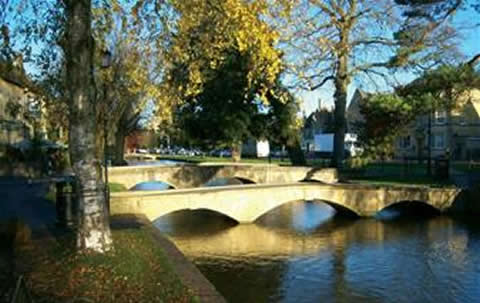
Probably the most popular village in the Cotswolds, and often referred to as the "Venice of the Cotswolds" because the River Windrush runs right through the centre. The sparkling water and the attractive low bridges crossing it create a charming scene.
The Slaughters
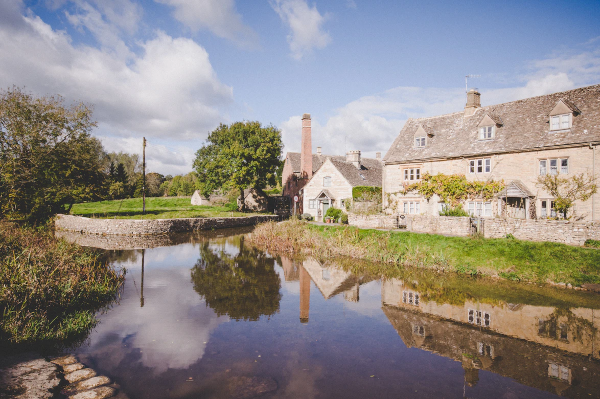
Only a couple of miles from Bourton-on-the-Water, Lower Slaughter is just off the Roman Fosse Way and a wonderfully conserved typical Cotswold village, with a Water Mill and ducks on the stream - a wander alongside the stream seems like a privilege.
Upper Slaughter is equally attractive with old cottages and farmhouses, and a Manor House now a hotel.
Stow-on-the-Wold
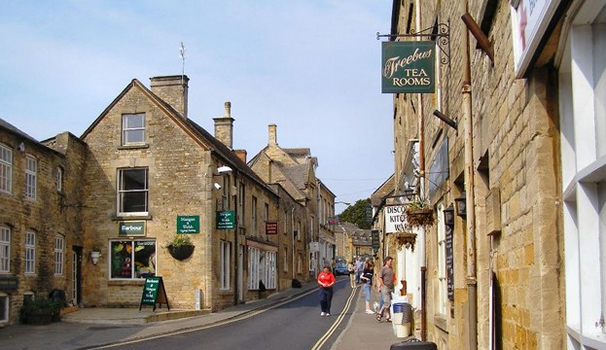
Famous as a centre for antiques, Stow-on-the-Wold, situated on the Roman Fosse Way, has a long history and probably dates from a prehistoric fortified settlement on top of the hill.
The Market Square is large and impressive and, surrounded by houses, shops and inns all built in the local Cotswold stone, it gives the feeling of being the focus of town life over many centuries.
At nearly 800ft, Stow-on-the-Wold is the highest of the Cotswold towns, approached uphill from all directions.
Bibury
William Morris called Bibury "the most beautiful village in England" and it remains most attractive in its setting alongside the river.
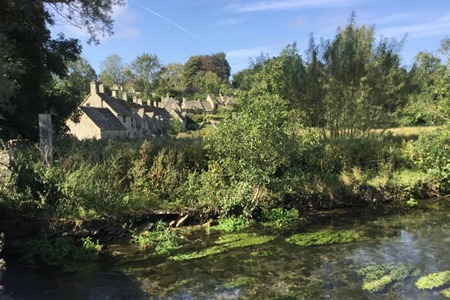
The 14th century Arlington Row provides the focal point. This was originally a wool store, then altered into weavers cottages and is now restored by the National Trust. The low roof line and row of gables give it true Cotswold style.
Northern Cotswolds
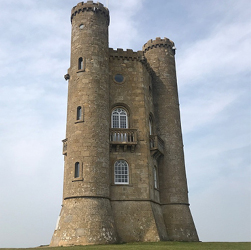
From London most people venturing to the northern part of the Cotswolds, the furthest part away from London, will combine a visit with Shakespeare's Stratford Upon Avon or Warwick Castle.
Broadway
Picture perfect with its honey-coloured Cotswold stone buildings, Broadway is one of the most picturesque of the Cotswold villages.
Its chocolate box looks you could be stepping onto a film set. With a wide range of antique and high quality shops, spectacular scenery and with lovely places to stay.
Fish Hill provides the impressive backdrop to Broadway and on top stands Broadway Tower, a 65 foot (20m) high folly. From the tower spectacular views of 12 counties can be enjoyed.
Moreton-in-Marsh
Located at the head of the beautiful Evenlode valley, Moreton is a thriving market town dating back 1000 years. Every Tuesday Moreton-in-Marsh hosts the largest open-air street market in the Cotswolds.
Snowshill
The village is known for its exceptional unspoilt beauty and for the views over the Severn Vale to the west. Charmingly set near the Worcestershire border, the Cotswolds rise to over 900ft around the village on three sides.
MOST POPULAR TOURS FROM LONDON 2024
VISITING STONEHENGE AND/OR WINDSOR AND/OR BATH
| Stonehenge Morning Half Day Tour - from £65 |
| Windsor Castle Windsor Morning & Afternoon Tours - from £70 |
| Windsor, Bath & Stonehenge (inc Lunch, no adm Roman Baths) - from £99 |
| Windsor, Bath & Stonehenge (no Lunch, inc adm Roman Baths) - from £92 |
| Windsor, Stonehenge & Salisbury - from £85 |
| Windsor & Bath Day Tour - from £85 |
| Windsor, Bath & Stonehenge (Small Group - Max 16 people) - from £156.60 |
| Stonehenge & Bath (Stonehenge admission only) - 3.5 hrs in Bath - from £88 |
| Stonehenge & Bath (Stonehenge & Baths adm) - 3.5 hrs in Bath - from £116 |
| Stonehenge & Bath (Stonehenge & Jane Austen Centre) - 3.5 hrs in Bath - from £118 |
| Stonehenge & Windsor (featuring extended time at Windsor) - from £85 |
| Stonehenge & Avebury - from £114 |
| Windsor, Stonehenge & Oxford - from £79 |
| Stratford, Cotswolds, Bath & Stonehenge - from £128 |
| Stonehenge, Glastonbury & Avebury (Small Group) - from £156.60 |
| Bath, Cotswolds, Stonehenge & Avebury (Small Group) - from £156.60 |
VISITING COTSWOLDS AND/OR OXFORD AND/OR STRATFORD AND/OR WARWICK
| Oxford, Stratford & Warwick Castle - from £74 |
| Oxford, Cotswolds & County pub lunch (Small Group) - from £156.60 |
| Stratford & Cotswolds (inc Anne Hathaway’s) - from £85 |
| Full-day Cotswolds only Tour (Small Group) - from £127 |
| In-depth Cotswolds Only Tour + Lunch - from £127 |
| Blenheim Palace, Downton Abbey Village & Cotswolds Tour - from £72 |
| Stratford, Cotswolds, Bath & Stonehenge - from £128 |
| Windsor, Stonehenge & Oxford - from £79 |
| Oxford & Cambridge Tour (May-Sep only) - from £97 |
| Downton Abbey & Blenheim Palace (Small Group) - £156.60 |
VISITING CANTERBURY, LEEDS CASTLE & DOVER
| Small group Leeds Castle, Dover & Canterbury with river cruise - from £149 |
| Dover Castle, White Cliffs & Canterbury - from £125 |
| Canterbury, Dover & Kent Villages - £139 |
SPECIAL THEME TOURS
| Stonehenge Special Access (Walk Among Stones) Tours |
| Downton Abbey + Highclere Castle Tours |
| Harry Potter Tours |
| London Rock Tour |
DAY TOURS BY TRAIN TO LIVERPOOL, PARIS & SCOTLAND
| Beatles Liverpool Day Tour - £198 |
| Day Trip to Paris - from £259 |
| Day Trip to Edinburgh - from £225 |
2 TO 12 DAY TOURS COVERING GREAT BRITAIN, IRELAND, PARIS & AMSTERDAM
| 2-day Windsor, Stonehenge, Bath & Oxford - from £349 |
| 3-day Stonehenge, Glastonbury, Bath & SW - from £275 |
| 5-day Peak District, Wales & Yorkshire- from £425 |
| 2-day private Stonehenge, Bath, Cotswolds & Oxford - from £650 |
| Budget 3 days in Paris - from £289 (not currently available) |
| Luxury 2 & 3 days in Paris - from £399 (not currently available) |
| 2-day Edinburgh - from £312 |
| 3-day Edinburgh & Scotland Weekend - from £379 (not currently available) |
| 3-day Edinburgh & Scotland Anytime - from £999 |
| 6-12-day tours of Great Britain and Ireland - from £1425 |


