

 Rome Toolkit
  Paris Toolkit
 Guide to hotel districts of central London
Identify the right hotel district for your hotel accommodation in central London
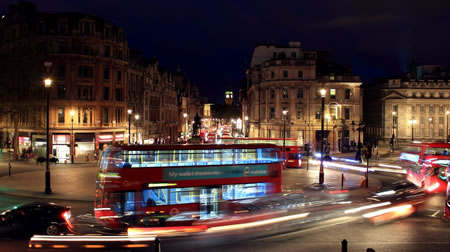
There is no universal “best” hotel or “best” district to stay in, there are better districts than others for your own individual preferences and budget.
On this page we try to help the first time visitor to London make an informed choice on suitable areas to look for accommodation.
There are literally hundreds of hotel accommodation options, grouped under 13 neighbourhoods, each one of them meeting the needs of a particular market.
Main hotel neighbourhoods in central London
Key points to consider when deciding where to stay in London
Where are the attractions?
The sights of London are spread out, so are the hotels, even the theatres and shops. Whichever hotel neighbourhood you choose to stay in, you will be travelling around using public transport to visit them. There is no “downtown” area in the North American sense or a universal "best located" neighbourhood. You will find some of the cheapest hotel areas have better access to some major attractions than the most expensive ones.
Where are the airports?
London has 5 major airports and 3 cruise and ferry ports ringed around it, and at least 10 mainline railway terminus stations each serving a different region of the UK. The most central area has no direct transport links to any of the airports or cruise ports . Hotel van shuttles are rare, slow and expensive. Some areas have good links to certain airports but inconvenient for others. Your entry and departure points should be a major factor in your choice.
Seasonality of room rates
Room rates in London are volatile, business rather than leisure visitors are more important to many hotel districts even in the budget sector. Districts that have a business bias are much cheaper at the weekend than working week. In the leisure dominated hotel districts it's the other way around. Highest rates in London are May, June, early July, late September and October when both leisure and business custom are running full throttle.
Broad summary of main hotel districts of London
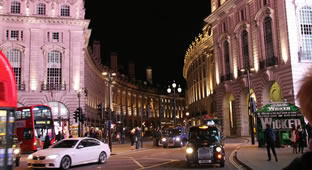
The West End hotels in London
• Very central • Expensive • Dominated by 4-star hotels • Close to theatre and nightlife • Tedious airport transfers
A loosely defined area in the centre of London geographically (Trafalgar Square is technically the centre) in London. The area is dominated by 4-5-star hotels with some of the highest prices. The theatre district (but not all the West End theatres) and much of London's nightlife is in this area.
Leicester Square and Covent Garden is the heart of this area and where the greatest concentration of theatres and nightlife are. Poor transport links to airports. Walking is the best way of getting around.
Mayfair and Piccadilly is in the western sector of the West End and is perhaps London's most exclusive hotel district with many of London's most expensive hotels. No major attractions are here, but some of the highest class shopping.
Oxford Street and Marble Arch is stretching the West End label to the edge of its envelope. On the norther border of Mayfair this is London's busiest shopping street. Most UK retail chains have their flagship stores here. Exclusive and niche shopping is not here. Harrods is not here, nor Fortnum & Mason, but Selfridges is. No big attractions and a couple of theatres.
At the western end of Oxford Street is Marble Arch, around which most of the hotels are situated. Mostly large 4 star chain hotels. Paddington Station is nearby with convenient trains to Heathrow and there are direct airport buses to Stansted and Luton airports.
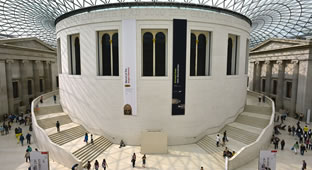
Bloomsbury hotels in London
• Very central • Walking distance to West End • Cheaper than West End but not a budget area • Wider range of hotel types • Attractive area to stay
Only 15 minutes' walk north of Covent Garden and Leicester Square. Very interesting district with lots of bookshops, collectors places and quirky attractions as well as the British Museum. A great area to just wander the streets and make your own discoveries.
All types of accommodation, but a step change in price downwards from the West End. King's Cross/St Pancras just a mile north is much cheaper. The only direct airport link within the district is the London Underground to Heathrow, but is not a bad choice for any airport or cruise port.
Hotels in Bloomsbury What is Bloomsbury area like? Bloomsbury airport & cruise transfers
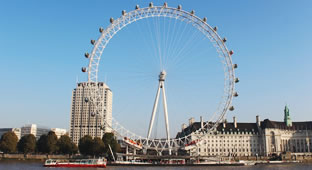
County Hall & Waterloo hotels in London
• Very central • Good base for sightseeing • Not so great for nightlife and shopping • Mostly large, luxury 4-star hotels • Budget options available • Cheaper at weekends and holiday periods
A small cluster of hotels, mostly large luxury 4 star chains (but with notable exceptions) by the London Eye. County Hall itself on the riverfront by Westminster Bridge directly facing Big Ben, Houses of Parliament and Westminster Abbey.
Because of the UK government offices in the area (County hall used to house London's governing body) a lot of trade comes from people on government business. At weekends room rates can be attractive given the quality of hotels here.
A fantastic location for the sightseeing orientated visitor, not that close to nightlife or the shops though. Quite convenient for those using Gatwick Airport and those on cruise ships out of Dover and Southampton (direct trains from Waterloo Station that is next door to County Hall).
Hotels in County Hall & Waterloo What is County Hall area like? County Hall & Waterloo airport & cruise transfers
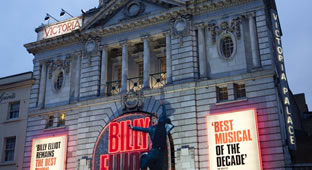
Victoria hotels in London
• Central location • All grades of accommodation • Major transport hub • Great base for sightseeing • Not the cheapest but not the most expensive • Cheaper during the week • Best location if flying into Gatwick
A very central location on the fringes of the West End, ( it has two West End theatres). Residents include J.K.Rowling and Google, and of course the Queen has a pad here at Buckingham Palace.
The full breadth of accommodation from cheap and cheerful to top of the range. You pay a premium to districts like Kensington and Paddington but much less than West End. Room rates are volatile, but the working week is normally cheaper than at the weekend. Peak weekend months the whole area can be sold out.
Victoria is a major transport hub both for within London and far afield. Many tours start from Victoria, especially day tours out of London. If you are flying into Gatwick this should be one of the districts you check out. Airport buses run to all 4 major London airports and there are direct trains to Gatwick and Dover cruise and ferry port. London's only long distance bus station is at Victoria.
Hotels in Victoria What is Victoria area like? Victoria airport & cruise transfers
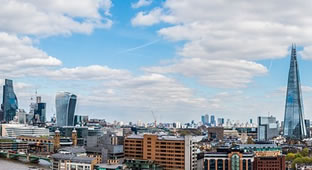
City of London, Tower Bridge & London Bridge hotels in London
• Business dominated area • High prices during the week, cheaper at weekends and holidays • Good quality hotels - mostly hotel chains • Great location around Tower of London and river • Inconvenient for Heathrow airport transfers
The original London which had the city walls around is to the east of where most tourists think of as the centre of London. Because of the history, some of the A list sights are here, notably the Tower of London and St Paul's Cathedral. This is one of the world's big financial centres and most of the district including hotels are attuned to the potential rich pickings. As such the price of hotel rooms keep most tourists away. However at the weekend the financiers go home leaving empty hotel beds to be filled - and the leisure visitor is welcome with attractive room rates.
There is a cluster of hotels around the Tower of London which are attractive the leisure traveller. As well as large 4 star chains there are some budget chains in this area too. The whole area has been rejuvenated in the last decade or so with old riverside warehouses being replaced with swanky bars, restaurants and an environment that is quite attractive.
Hotels can be exorbitant during the working week but at the weekend bargains at nice 4 star hotels can be found.
There are direct trains to Gatwick, Stansted and Luton Airports from London Bridge and Liverpool Street stations. If you are on a cruise from Harwich the only transport link are the trains that terminate at Liverpool Street. Dover cruise port is serviced by trains from London Bridge. This is the wrong side of town for those using Heathrow Airport - a tedious journey whatever method you end up with.
Hotels in City of London What is City of London area like? City of London airport & cruise transfers
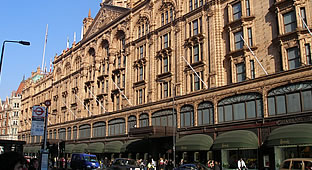
Kensington hotels in London
• Value for money in all grades of accommodation • Convenient transfers from Heathrow airport
One of the largest districts on the west side of London. The residents have the highest average per capita wealth than any in the UK, higher than any US county as well. Despite this it is very much a value for money district. It's a large area, at the western end is Earl's Court, the largely budget district. 10 minutes' walk along the Cromwell Road to Gloucester Road Underground and you're into value 4 star area, Holiday Inn being typical in having many hotels in London of which their hotel here is one of the cheapest. Another 10-15 minutes' walk along the road and you are into Knightsbridge, home of Harrods and some of the most exclusive hotels in London.
For the leisure visitor the hotels around Gloucester Road and Earl's Court are popular. Whatever class of hotel you are after there will be a good choice here with value for money pricing compared to many other districts. The hop-on hop-off sightseeing buses come out to Gloucester Road and the Piccadilly Line of the Underground will have you most places in Central London within 20 minutes and going the other way Heathrow Airport. If you are flying into Heathrow, you should at least take a look at Kensington. It's the closest district to London's busiest airport. Kensington is the wrong side of London if you are using Stansted Airport.
Hotels in Kensington What is Kensington area like? Kensington airport & cruise transfers
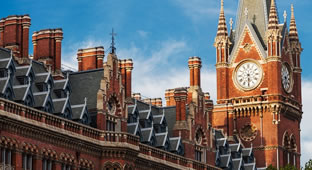
King's Cross, St Pancras & Euston hotels in London
• If cost is number one purchasing criteria, consider Kings Cross bed and breakfasts • Great area to explore London from though not much to do in the area itself • Good airport links • Good value in luxury hotels at weekends
Three mainline railway stations all within half a mile of each other. St Pancras is the terminus for the Eurostar trains to Europe, all three have services that cover most of Northern England, North Wales and Scotland. King's Cross and St Pancras are next to each other and share the same Underground station.
Although King's Cross St Pancras is not somewhere you will dwell, it's a great district for cheap hotels. Of the cheap B&B hotel districts, this area has some of the best propositions, although prices have risen in recent years and King's Cross is no longer first call for cheap prices. There are also some chain mid-range hotels and a few 4 stars and the excellent 5 Star Renaissance Hotel St Pancras.
With London's busiest Underground Station this is a great base to explore London. There are direct train links to Heathrow, Gatwick and Luton airports as well as Dover cruise port. Stansted is easy to get to too. Past the British Library (worthwhile to visit) from St Pancras is Euston Station. There is a marked change, the district being slightly less frantic with medical schools, a major hospital and London university in the vicinity. There are some very nice independent and chain 3 star grade hotels here and at the weekend some 4 stars can offer good rates too.
Hotels in Kings Cross/St Pancras Area and stations guide Kings Cross & St Pancras airport & cruise transfers

Paddington hotels in London
• Value for money • Best location for Heathrow transfers • Good base to explore London from but nothing much in the area itself • Vast area of hotels with a bias towards the budget end • A good mix of cheap and expensive options
At the north west corner of the hotel districts of London the whole Paddington district revolves around Paddington train station, terminus of the Heathrow Express train and trains to the west of England and Wales. The area around the train station is a busy, bustling place, with thousands passing through daily.
To the south of the station is a carpet of hotels. Budget independent hotels dominate but there are some nice upmarket hotels too. A district for those wanting value for money. Lancaster Gate close by is not quite so hectic, more elegant and overlooking Hyde Park. The global brands in the district are restricted to the 4 star sector. Budget offerings are almost exclusively independent. There are some good independent hotels and some real cheap ones too.
Apart from value for money, the biggest draw for overseas visitors are the Heathrow Express and TFL Rail Heathrow trains to Heathrow Airport from Paddington making it a convenient place to base yourself if using Heathrow. If you are not using Heathrow, the attractions of Paddington are not so great.
Hotels in Paddington What is Paddington area like? Paddington airport & cruise transfers
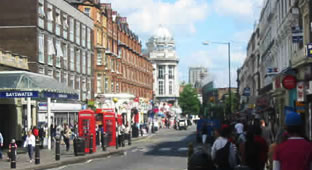
Bayswater hotels in London
• Budget area • Pleasant neighbourhood neighbouring Hyde Park • Variety of hotels, restaurants and facilities for the budget traveller • Dominated by cheap independent hotels • Nice area to stay in
As the area is geared almost exclusively to leisure visitors rates are very attractive during the week but can be expensive at the weekend in the same hotel. The district is dominated by cheap independent hotels, some are of the cheap and nasty kind. Despite its budget market its a very pleasant district to stay. Kensington Palace, Hyde Park and Portobello Market are in the district, most sights are linked by Underground within 20 minutes. The district is adjacent to Paddington, so is convenient for those using Heathrow Airport.
Hotels in Bayswater What is Bayswater area like? Bayswater airport & cruise transfers
Hilton Sale with 24-hr hop-on hop-off bus tickets included
Our Hilton sale has a selection of quality Hilton hotels in London with great prices and a free 24-hr hop-on hop-off bus ticket too. This means you can stay in luxury and have 24-hrs of sightseeing all included for one great price. Just click Book Now on our banner below to explore the Hilton hotels featuring this offer.

London airport hotels and cruise port hotels
Other things to consider...
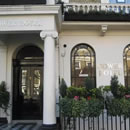
Budget areas and cheap hotels
The cheapest hotel accommodation is the so called bed and breakfast hotels. Be not in doubt, these are not homely houses with a couple of rooms rented out by attentive family owners. These are small simple hotels, with none of the frills.
The bed and breakfast hotels are typically 4-, 5- or 6-storey Victorian terraced houses. Many will not have lifts. The main attraction is price, somewhere to safely store your luggage and a simple place to sleep while you spend the day exploring London. If price is an overriding purchasing criteria, Earls Court district of Kensington is a good place to start your search and Bayswater mid-week and Kings Cross too.
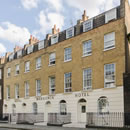
Mid-range hotels and no-frills budget hotels
If you are looking for a comfortable hotel but don't want to pay out for concierges, fitness centres, 24 hour room service that come with 4 and 5 star hotels then the benchmark will normally be the 'no frills' budget chains.
In the UK, the leading such chains are Travelodge and Premier Inn which you might like to use as a benchmark. Travelodge is the cheap one, Premier Inn the quality one. There are of course many others, independent budget hotels tend to be cheaper and other chains like Best Western, Ibis and Comfort Inn are all well represented.

Hotels' star ratings - misleading indicator
A lot of people make the mistake that they think the number of stars that a hotel has reflects on how good it is. Every country seems to have different rules for the classification of hotels. In the UK, 2, 3, 4 and 5 stars are awarded purely on the basis of services provided, not how clean a hotel is or how good the service.
Some hotels, notably the no frills chain hotels don't even bother getting stars assigned as it would be totally misleading for them.
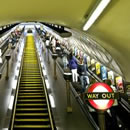
Safety in London
Firstly, London is a safe city for the visitor. All the main hotel areas are safe, even at night - but of course this assumes you take the normal common sense precautions like anywhere else in the world.
The London Underground is the main way most visitors will get around London. It's perfectly safe (again within common sense) to ride the Underground until it closes around midnight. If you hire a taxi, make sure it's a proper licensed taxi - only London's distinctive black cabs are allowed to solicit for business.