

 Rome Toolkit
  Paris Toolkit
 Visiting Oxford University
What to expect when coming to Oxford to see the colleges
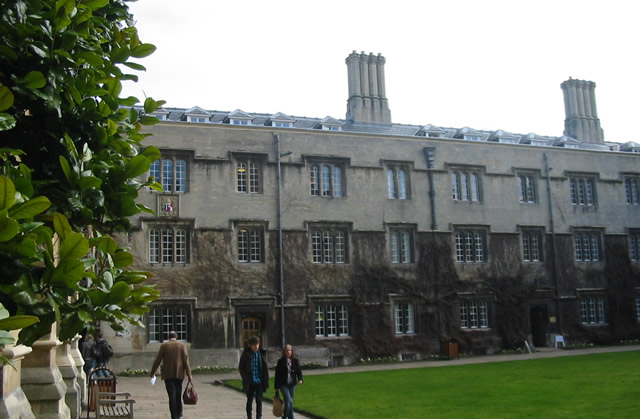
As the oldest university in the English-speaking world, Oxford is an historic institution.
There is no clear date of foundation, but teaching existed at Oxford in some form in 1096 and developed rapidly from 1167, when Henry II banned English students from attending the University of Paris.
If you wish to visit one of the colleges this is possible for a small admittance fee.
Also popular are walking tours of Oxford; the most popular being The University and City Tour.
Oxford University history Visiting Oxford colleges BOOK Oxford University walking tours Oxford and Cambridge Tour
Oxford University history
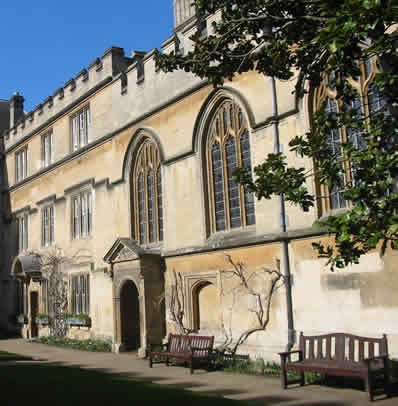
In 1190 the arrival of Emo of Friesland, the first known overseas student, set in motion the University's tradition of international scholarly links.
In the 13th century, rioting between town and gown (townspeople and students) hastened the establishment of primitive halls of residence. These were succeeded by the first of Oxford's colleges, which began as medieval 'halls of residence'. University, Balliol and Merton Colleges, which were established between 1249 and 1264, are the oldest.
Today thirty-eight Colleges, independent and self-governing form the core of the University, to which they are related in a federal system. There are over 20,000 students at Oxford, including around 11,000 undergraduates and 8,000 postgraduates. Over 50 per cent of undergraduates are studying for degrees in the humanities and social sciences, the rest in the medical, mathematical, physical and life sciences.
No college is tied to any subject. The student resides and studies at his/her own college. The tutorial is at the core of undergraduate teaching. Students meet regularly with their college tutor, either on a one-to-one basis or with one or two other students.
On average, an hour-long tutorial happens every week requiring a considerable number of hours preparatory work for each tutorial, including background reading, essay-writing and problem-solving. This may be supplemented by lectures within the University.
The academic year at Oxford University runs from October to June. The year is divided into three eight week terms, Michaelmas (autumn), Hilary (spring), and Trinity (summer).
Visiting Oxford colleges
Most of the colleges are happy to admit visitors who wish to look around. However, most are only open in the afternoon for a few hours and many charge a small fee.
Christ Church, the largest college, is the most organised in this respect. The most interesting and oldest colleges are in the heart of the city.
Official guides are able to take small groups into colleges at times when the general public cannot enter. If you take a coach tour to Oxford, a walking tour will form the main part of your visit. What you see and where you go varies widely from tour to tour, even with the same company - so do read this part of the tour itinerary closely.
Oxford University and City Walking Tours
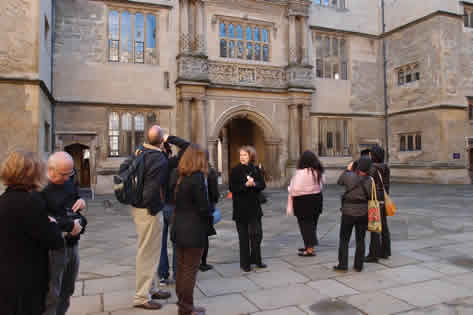
Walking tours of the city centre, conducted by the Guild of Guides, depart from the Oxford Information Centre and last between 1.5 and 2 hours.
As well as introductory guided walking tours, specially themed tours are also available - walk in Harry Potter's footsteps or take in Oxford's architecture for example.
Oxford Official University and City Tour
This is the most popular introductory tour taken by the majority of visitors. The guide will take you through the heart of the historic city centre, illustrating the story of Oxford and it university. Describing the architecture and traditions of its most famous buildings and institutions.
The guide will provide a full briefing on the start of the College's and University life today. The University and City Tour normally visits inside at least one college and also covers the other main sights around the city centre.
The University and City Tour runs daily with frequencies reflecting the time of year. There is normally at least two tours daily with up to eight tours at peak times. The tourist office is easily found in Broad Street and is well signposted all over Oxford city centre.
Oxford & Cambridge Tour

OXFORD AND CAMBRIDGE UNIVERSITIES
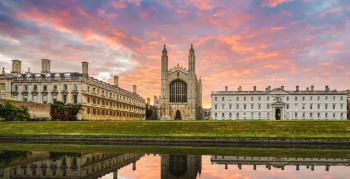
Full day tour of Oxford and Cambridge Universities from London
Adult from £97
• Guided walking tours of Oxford and Cambridge • Expert tour guide • Travel by superior coach • London in your Pocket app access
MOST POPULAR TOURS FROM LONDON 2024
VISITING STONEHENGE AND/OR WINDSOR AND/OR BATH
| Stonehenge Morning Half Day Tour - from £65 |
| Windsor Castle Windsor Morning & Afternoon Tours - from £70 |
| Windsor, Bath & Stonehenge (inc Lunch, no adm Roman Baths) - from £99 |
| Windsor, Bath & Stonehenge (no Lunch, inc adm Roman Baths) - from £92 |
| Windsor, Stonehenge & Salisbury - from £85 |
| Windsor & Bath Day Tour - from £85 |
| Windsor, Bath & Stonehenge (Small Group - Max 16 people) - from £156.60 |
| Stonehenge & Bath (Stonehenge admission only) - 3.5 hrs in Bath - from £88 |
| Stonehenge & Bath (Stonehenge & Baths adm) - 3.5 hrs in Bath - from £116 |
| Stonehenge & Bath (Stonehenge & Jane Austen Centre) - 3.5 hrs in Bath - from £118 |
| Stonehenge & Windsor (featuring extended time at Windsor) - from £85 |
| Stonehenge & Avebury - from £114 |
| Windsor, Stonehenge & Oxford - from £79 |
| Stratford, Cotswolds, Bath & Stonehenge - from £128 |
| Stonehenge, Glastonbury & Avebury (Small Group) - from £156.60 |
| Bath, Cotswolds, Stonehenge & Avebury (Small Group) - from £156.60 |
VISITING COTSWOLDS AND/OR OXFORD AND/OR STRATFORD AND/OR WARWICK
| Oxford, Stratford & Warwick Castle - from £74 |
| Oxford, Cotswolds & County pub lunch (Small Group) - from £156.60 |
| Stratford & Cotswolds (inc Anne Hathaway’s) - from £85 |
| Full-day Cotswolds only Tour (Small Group) - from £127 |
| In-depth Cotswolds Only Tour + Lunch - from £127 |
| Blenheim Palace, Downton Abbey Village & Cotswolds Tour - from £72 |
| Stratford, Cotswolds, Bath & Stonehenge - from £128 |
| Windsor, Stonehenge & Oxford - from £79 |
| Oxford & Cambridge Tour (May-Sep only) - from £97 |
| Downton Abbey & Blenheim Palace (Small Group) - £156.60 |
VISITING CANTERBURY, LEEDS CASTLE & DOVER
| Small group Leeds Castle, Dover & Canterbury with river cruise - from £149 |
| Dover Castle, White Cliffs & Canterbury - from £125 |
| Canterbury, Dover & Kent Villages - £139 |
SPECIAL THEME TOURS
| Stonehenge Special Access (Walk Among Stones) Tours |
| Downton Abbey + Highclere Castle Tours |
| Harry Potter Tours |
| London Rock Tour |
DAY TOURS BY TRAIN TO LIVERPOOL, PARIS & SCOTLAND
| Beatles Liverpool Day Tour - £198 |
| Day Trip to Paris - from £259 |
| Day Trip to Edinburgh - from £225 |
2 TO 12 DAY TOURS COVERING GREAT BRITAIN, IRELAND, PARIS & AMSTERDAM
| 2-day Windsor, Stonehenge, Bath & Oxford - from £349 |
| 3-day Stonehenge, Glastonbury, Bath & SW - from £275 |
| 5-day Peak District, Wales & Yorkshire- from £425 |
| 2-day private Stonehenge, Bath, Cotswolds & Oxford - from £650 |
| Budget 3 days in Paris - from £289 (not currently available) |
| Luxury 2 & 3 days in Paris - from £399 (not currently available) |
| 2-day Edinburgh - from £312 |
| 3-day Edinburgh & Scotland Weekend - from £379 (not currently available) |
| 3-day Edinburgh & Scotland Anytime - from £999 |
| 6-12-day tours of Great Britain and Ireland - from £1425 |


