

 Rome Toolkit
  Paris Toolkit
 Glastonbury Myths & Legends
The legends that are interwoven forming much of your Glastonbury experience
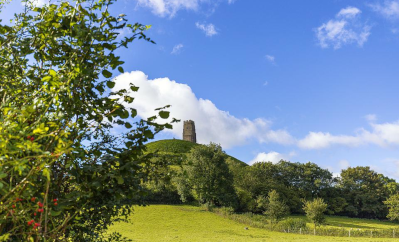
Glastonbury is steeped in legends and mysticism that weave themselves through much of what you will see and experience at Glastonbury.
On this page we give a briefing to the three main strands of legend and its impact on what you will see and experience at Glastonbury today.
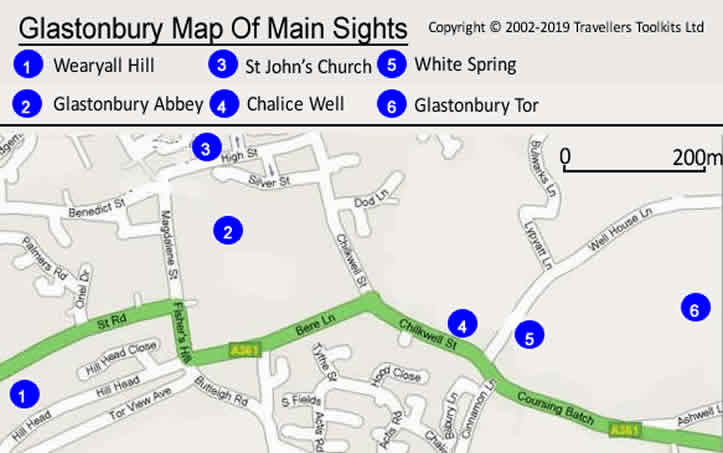
We also offer a map of the main sights of Glastonbury, including the White Spring, Wearyall Hill, Chalice Well, Glastonbury Abbey and Glastonbury Tor.
Joseph of Arimathea King Arthur Mystical Glastonbury Tour from London visiting Glastonbury
Joseph of Arimathea and the Holy Grail
Joseph of Arimathea was a wealthy disciple of Jesus. He also provided the tomb where the crucified Lord was laid until his Resurrection.
After the death of Jesus, legend has it that Joseph accompanied the Apostle Philip, Lazarus, Mary Magdalene & others on a preaching mission to Gaul. Lazarus & Mary stayed in Marseilles, while the others travelled north towards Britain.
At the English Channel, St Philip sent Joseph, with twelve disciples, to establish Christianity in the most far-flung corner of the Roman Empire: the Island of Britain. The year AD 63 is commonly given for this "event".
His boat ran ashore in the Glastonbury Marshes and, together with his followers, he climbed a nearby hill to survey the surrounding land.
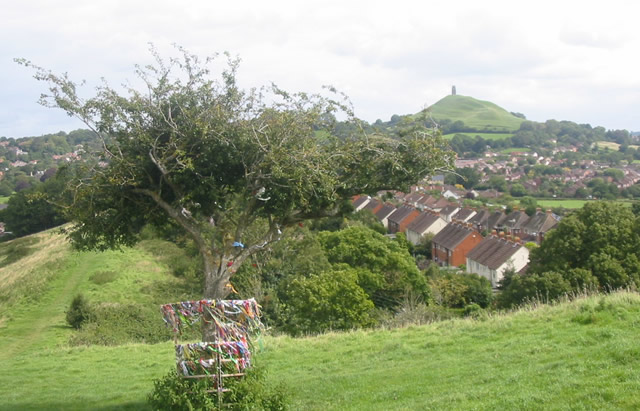
Having brought with him a staff grown from Christ's Holy Crown of Thorns, he thrust it into the ground and announced that he and his twelve companions were "Weary All". The thorn staff immediately took miraculous root, and it can be seen there still on Wearyall Hill.
At Glastonbury Joseph built the first monastery in Britain. From here he became the country's evangelist.
Further, Joseph is said to have brought with him to Britain a cup, said to have been used at the Last Supper and also used to catch the blood dripping from Christ as he hung on the Cross.
A variation of this story is that Joseph brought with him two cruets, one containing the blood and the other, the sweat of Christ.
King Arthur & Avalon
Glastonbury claims to be Avalon and to be the final resting place of King Arthur. The nearby hill fort at South Cadbury has long been suggested as the location for Camelot.
According to legend after Arthur's many exploits and stories concerning his Knights, the Round Table and the Holy Grail, he was wounded by Mordred at the battle of Camlann. This was around the year 542 and he was then taken across the water to the Isle of Avalon for his wounds to be healed.
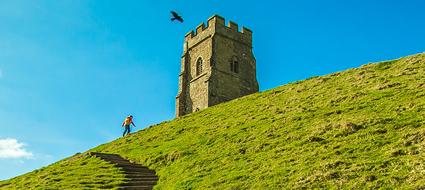
Glastonbury Tor, the hill that rises above Glastonbury, has been linked with the Isle of Avalon, where King Arthur was buried after his death. This isn't so far-fetched as it may sound, for a millennium ago the water level was much higher, and the tor would indeed have been an island. Avalon was also called "the isle of glass" which does suggest similarities to the name "Glastonbury".
The Holy Grail, the object of Arthur's questing, is said to be buried beneath Glastonbury Tor, and has also been linked to Chalice Well at the base of the Tor.
The association of Arthur and Glastonbury goes back at least to the early Middle Ages. In the late 12th century the monks of Glastonbury Abbey announced that they had found the grave of Arthur and Guinevere, his queen.
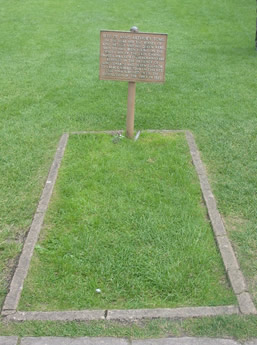
According to the monks, an excavation found a stone inscribed "Here lies Arthur, king." Below the stone they found the bones of a large man, and the smaller skeleton of a woman. The monks reburied the bones in the grounds of the abbey, where they were a very handy draw for pilgrims. The site of the grave can be seen today in the Glastonbury Abbey grounds.
Mystical Glastonbury - Druids, Earth Goddesses, Ley Lines ...
Glastonbury is a centre for mystics, earth spirits and such like, a substantial part of what makes Glastonbury unique. A walk down Glastonbury High Street encounters many retail outlets focused on the broad mystic subject and you'll encounter quite a few people in character strolling around on their everyday business.
You have a good chance of there being some kind of allied exhibition or meeting taking place.
Back 2,000 years ago the Celts believed Glastonbury Tor was a gateway to the underworld. The White Spring at the foot of Glastonbury Tor is now being turned into a Temple for such people who are into Mother Earth and mystic beliefs.
Natural geomagnetic lines in the earth, (ley lines) come together at Glastonbury. One such ley line called 'The Michael line'. 'The Michael line' flows down from the Tor and then passes through the other major Glastonbury sites - Chalice Well, the Abbey and Wearyall Hill.
King Arthur's Realm day tour from London
Visiting Stonehenge, Glastonbury and Avebury
If you are a visitor from London and would like a really special day out to remember, there is one specialist guided small group tour, King Arthur's Realm.
This tour will take you into the hidden world of Avalon, a full day out covering many historical and spiritual sites, including Glastonbury as well as two other essential places of pilgrimage; Stonehenge and Avebury.
Out on Salisbury Plain you'll see the enigmatic World Heritage Site of Stonehenge. Here you'll witness up close the splendour of the magical stones, and discuss the possible theories behind Stonehenge's existence.
In Glastonbury you'll enjoy breathtaking views from the top of the famous Glastonbury Tor and discover secrets at the sacred Chalice Well (where the cup from the Last Supper was said to have been hidden in the First Century by Joseph Arimathea).
At Glastonbury Abbey you can and pay your respects to the grave of Arthur himself.
Finally, at Avebury you can walk the largest prehistoric stone circle in the world. Avebury is a magical place, with lots of ancient history with strong spiritual meaning for many people.
Expect a full day of druids, battles, magic and grail legends with your knowledgeable guide. Not to be missed.
More details of the King Arthur's Realm tour

SMALL GROUP STONEHENGE, GLASTONBURY & AVEBURY
Stonehenge, Glastonbury & Avebury Small Group guided day tour from London
Flexi adult from £174 • Best rate adult from £156.60 • Flexi child (3-15 years) from £154 • Best rate child from £138.60
• Small group day trip - maximum 16 people per tour • Admission to Stonehenge, Glastonbury Abbey & Avebury Stone Circle • Beat the crowds at Stonehenge - go there first! • Professional guide • Photo stop at Glastonbury Tor and entry to Chalice Well Gardens
MOST POPULAR TOURS FROM LONDON 2024
VISITING STONEHENGE AND/OR WINDSOR AND/OR BATH
| Stonehenge Morning Half Day Tour - from £65 |
| Windsor Castle Windsor Morning & Afternoon Tours - from £70 |
| Windsor, Bath & Stonehenge (inc Lunch, no adm Roman Baths) - from £99 |
| Windsor, Bath & Stonehenge (no Lunch, inc adm Roman Baths) - from £92 |
| Windsor, Stonehenge & Salisbury - from £85 |
| Windsor & Bath Day Tour - from £85 |
| Windsor, Bath & Stonehenge (Small Group - Max 16 people) - from £156.60 |
| Stonehenge & Bath (Stonehenge admission only) - 3.5 hrs in Bath - from £88 |
| Stonehenge & Bath (Stonehenge & Baths adm) - 3.5 hrs in Bath - from £116 |
| Stonehenge & Bath (Stonehenge & Jane Austen Centre) - 3.5 hrs in Bath - from £118 |
| Stonehenge & Windsor (featuring extended time at Windsor) - from £85 |
| Stonehenge & Avebury - from £114 |
| Windsor, Stonehenge & Oxford - from £79 |
| Stratford, Cotswolds, Bath & Stonehenge - from £128 |
| Stonehenge, Glastonbury & Avebury (Small Group) - from £156.60 |
| Bath, Cotswolds, Stonehenge & Avebury (Small Group) - from £156.60 |
VISITING COTSWOLDS AND/OR OXFORD AND/OR STRATFORD AND/OR WARWICK
| Oxford, Stratford & Warwick Castle - from £74 |
| Oxford, Cotswolds & County pub lunch (Small Group) - from £156.60 |
| Stratford & Cotswolds (inc Anne Hathaway’s) - from £85 |
| Full-day Cotswolds only Tour (Small Group) - from £127 |
| In-depth Cotswolds Only Tour + Lunch - from £127 |
| Blenheim Palace, Downton Abbey Village & Cotswolds Tour - from £72 |
| Stratford, Cotswolds, Bath & Stonehenge - from £128 |
| Windsor, Stonehenge & Oxford - from £79 |
| Oxford & Cambridge Tour (May-Sep only) - from £97 |
| Downton Abbey & Blenheim Palace (Small Group) - £156.60 |
VISITING CANTERBURY, LEEDS CASTLE & DOVER
| Small group Leeds Castle, Dover & Canterbury with river cruise - from £149 |
| Dover Castle, White Cliffs & Canterbury - from £125 |
| Canterbury, Dover & Kent Villages - £139 |
SPECIAL THEME TOURS
| Stonehenge Special Access (Walk Among Stones) Tours |
| Downton Abbey + Highclere Castle Tours |
| Harry Potter Tours |
| London Rock Tour |
DAY TOURS BY TRAIN TO LIVERPOOL, PARIS & SCOTLAND
| Beatles Liverpool Day Tour - £198 |
| Day Trip to Paris - from £259 |
| Day Trip to Edinburgh - from £225 |
2 TO 12 DAY TOURS COVERING GREAT BRITAIN, IRELAND, PARIS & AMSTERDAM
| 2-day Windsor, Stonehenge, Bath & Oxford - from £349 |
| 3-day Stonehenge, Glastonbury, Bath & SW - from £275 |
| 5-day Peak District, Wales & Yorkshire- from £425 |
| 2-day private Stonehenge, Bath, Cotswolds & Oxford - from £650 |
| Budget 3 days in Paris - from £289 (not currently available) |
| Luxury 2 & 3 days in Paris - from £399 (not currently available) |
| 2-day Edinburgh - from £312 |
| 3-day Edinburgh & Scotland Weekend - from £379 (not currently available) |
| 3-day Edinburgh & Scotland Anytime - from £999 |
| 6-12-day tours of Great Britain and Ireland - from £1425 |


